- Follow us:


Water Weight: What It Is, Causes, and How to Lose It Safely
26/01/2026
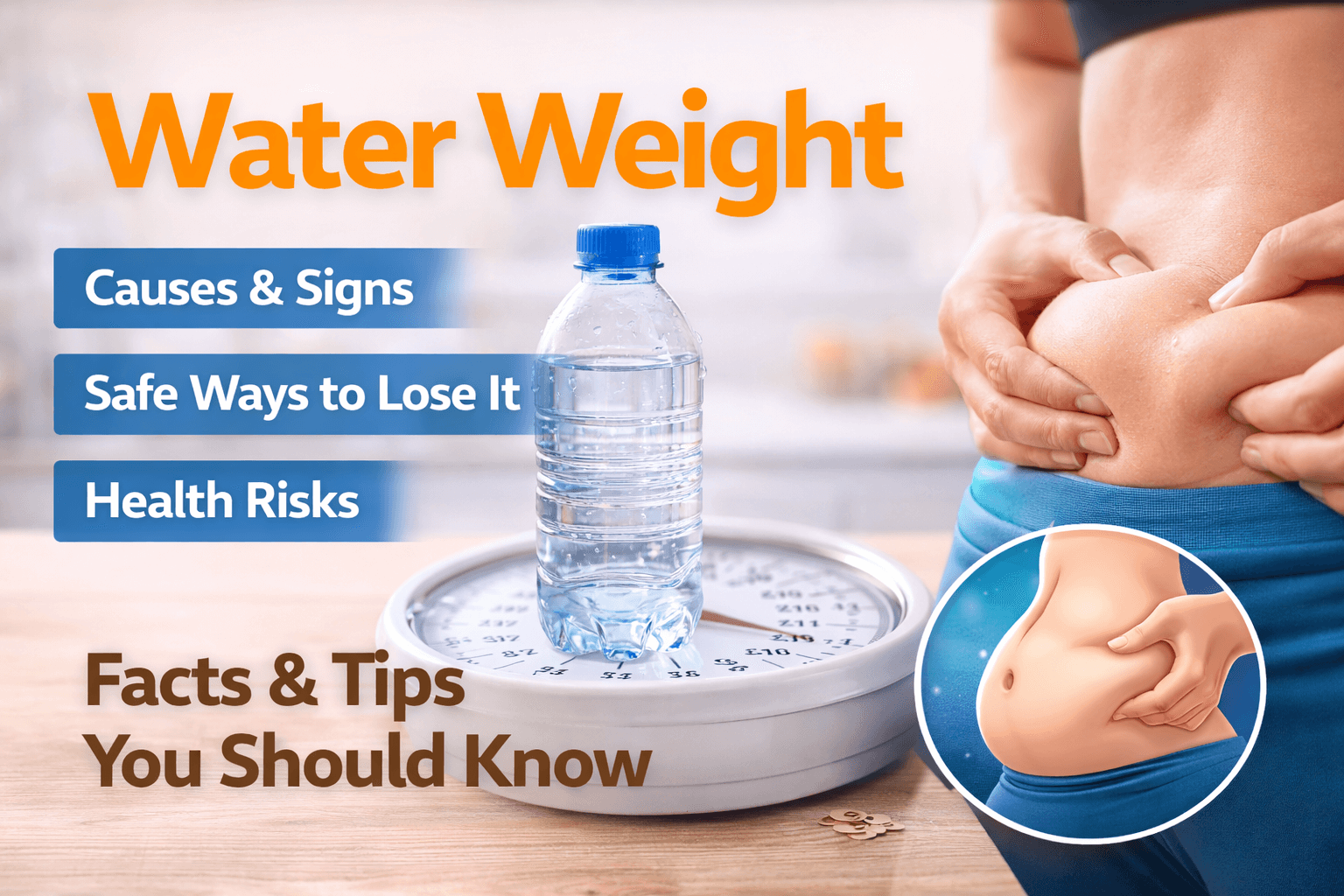
Feeling bloated, puffy, or suddenly heavier on the scale even though your diet hasn’t changed? This sudden fluctuation is often due to water weight, not fat gain. Understanding why it happens and how to manage it can save you frustration and help you make smarter health decisions.
This guide explains what water weight really means, common causes, and practical ways to reduce it safely.
Table of Contents
What Is Water Weight?
Water weight refers to extra fluid stored in the body’s tissues, joints, or bloodstream. Unlike body fat, it can fluctuate quickly—sometimes within hours or days.
Your body naturally holds water to:
- Regulate temperature
- Transport nutrients
- Support digestion
- Maintain electrolyte balance
Problems arise when the body retains more fluid than it needs.
How Water Weight Differs From Fat Gain
Many people confuse water retention with fat gain, but they are very different.
Water weight:
- Appears suddenly
- Causes bloating and puffiness
- Can change daily
- Drops quickly with lifestyle adjustments
Fat gain:
- Develops slowly
- Doesn’t fluctuate daily
- Requires a calorie surplus over time
If the scale jumps overnight, water retention is often the culprit.
Common Causes
High Sodium Intake
Eating salty foods causes the body to retain water to maintain sodium balance. Processed foods, restaurant meals, and packaged snacks are common triggers.
Hormonal Changes
Hormones strongly influence fluid balance.
- Menstrual cycles
- Pregnancy
- Menopause
These can all lead to temporary water retention.
Carbohydrate Intake
Carbs are stored as glycogen, and each gram of glycogen binds to water. Increasing carb intake can temporarily increase it.
Dehydration
Ironically, not drinking enough water makes the body hold onto fluids as a survival response.
Lack of Physical Activity
Sitting or standing for long periods slows circulation, leading to fluid pooling in the legs, ankles, and feet.
Stress and Cortisol
Chronic stress raises cortisol levels, which can cause fluid retention and bloating.
How Much Does a Gallon of Water Weigh?
A common question is about the weight.
- One gallon of water weighs about 8.34 pounds, which is roughly 3.78 kilograms.
This explains why hydration levels can cause noticeable changes on the scale without any real body fat change.
Common Symptoms
You may be retaining extra fluid if you notice:
- Swollen fingers or ankles
- Puffy face
- Tight rings or shoes
- Bloating after meals
- Rapid weight changes within a day or two
How to Lose Water Weight Safely
If you’re wondering how to lose it, focus on balance—not extreme measures.
Drink More Water
Consistent hydration signals the body that it doesn’t need to hold excess fluid.
Reduce Sodium Intake
Limit processed foods and cook more meals at home using herbs instead of salt.
Increase Potassium-Rich Foods
Potassium helps balance sodium levels.
- Bananas
- Spinach
- Sweet potatoes
- Avocados
Move Your Body
Light exercise improves circulation and helps flush out excess fluid through sweat.
Manage Stress
Deep breathing, walking, and proper sleep help regulate cortisol levels.
Improve Sleep Quality
Poor sleep disrupts hormones that control fluid balance.
Foods That Help Reduce Water Retention
Some foods naturally support fluid balance:
- Cucumbers
- Asparagus
- Watermelon
- Yogurt
- Leafy greens
These foods are hydrating and low in sodium.
What Not to Do When Trying to Lose Water Weight
Avoid:
- Extreme dehydration
- Overusing diuretics
- Cutting all carbohydrates
- Skipping meals
These methods may cause short-term scale drops but can harm your health.
When this condition may signal a Health Issue
Occasional water retention is normal, but persistent swelling could indicate:
- Kidney problems
- Heart conditions
- Thyroid disorders
- Medication side effects
If swelling is painful, sudden, or persistent, consult a healthcare professional.
Water Weight vs Bloating: Are They the Same?
Not exactly.
- Water weight involves fluid retention in tissues
- Bloating is often related to digestion, gas, or food sensitivities
They can occur together but have different causes and solutions.
Do you know water weight is different from body fat? Know the difference here.
Frequently Asked Questions (FAQs)
How long does water weight last?
It usually resolves within a few days once the cause is addressed.
Can exercise helps?
Yes, movement improves circulation and encourages fluid release.
Is water weight fat?
No, it’s temporary fluid retention and not body fat.
Why does water weight/retention increase overnight?
Hormones, sodium intake, and hydration levels all change while you sleep.
Can drinking more water reduce retention?
Yes, proper hydration helps prevent the body from holding excess fluid.
Key Takeaways
- This condition is temporary and common
- It’s often caused by sodium, hormones, or dehydration
- Safe lifestyle changes are the best solution
- Sudden weight changes are rarely fat gain
- Persistent swelling should be medically evaluated
Understanding your body’s fluid balance helps you avoid unnecessary worry and focus on long-term health instead of short-term scale changes.
Our other blogs:
Explore more helpful guides to support a healthy lifestyle for your family.