
- Follow us:


Types of Ankle Sprains: Causes, Symptoms, and Recovery Guide
20/01/2026
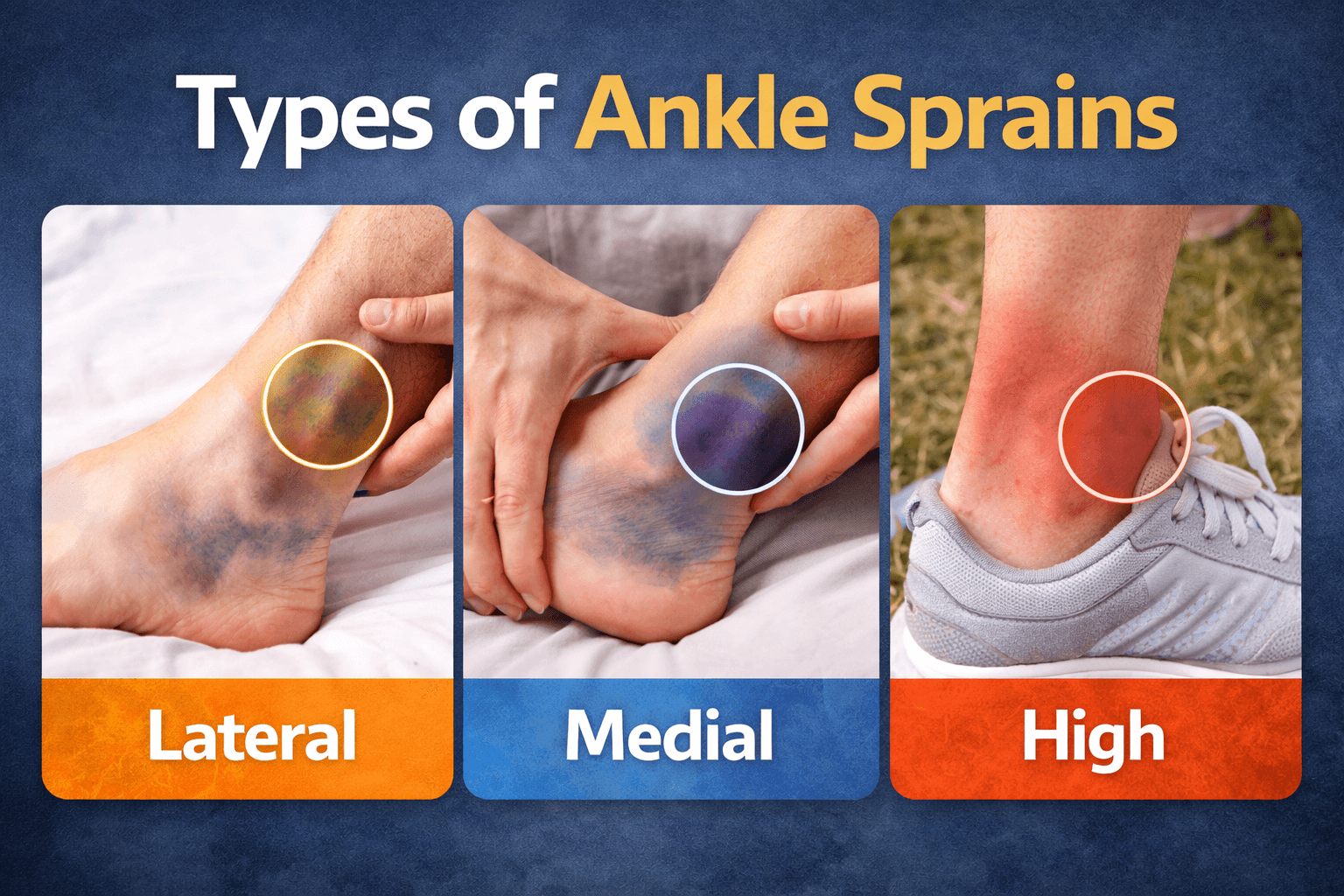
An ankle injury can happen in seconds—during a workout, a morning walk, or even stepping off a curb. Understanding the types of ankle sprains is important because each injury affects the ankle differently and requires specific care for proper healing.
Some sprains recover quickly with rest, while others need targeted rehabilitation. Knowing what you’re dealing with helps prevent long-term pain, stiffness, or repeat injuries.
Table of Contents
What Is an Ankle Sprain?
An ankle sprain happens when the ligaments that help support the ankle get stretched more than they should or get torn. Ligaments act like strong bands that stabilize the joint. When they’re damaged, the ankle becomes painful, swollen, and unstable.
Ankle sprains are among the most common joint injuries worldwide, especially in sports, fitness training, and daily activities involving uneven surfaces.
Why Understanding the Types of Ankle Sprains Matters
Not all ankle injuries are the same. The types of ankle sprains differ based on which ligaments are injured and how the ankle twists during the injury.
Knowing the exact type helps with:
- Faster and safer recovery
- Choosing the right treatment approach
- Reducing the risk of chronic ankle instability
- Avoiding unnecessary rest or overtraining
Overview of the Different Types of Ankle Sprains
There are three main ankle sprains types, classified by the direction of injury and ligaments involved:
- Lateral ankle sprain
- Medial ankle sprain
- High ankle sprain
Each of these different types of ankle sprains affects movement, healing time, and treatment plans differently.
1. Lateral Ankle Sprain (Most Common)
A lateral ankle sprain occurs when the foot rolls inward, stretching or tearing the ligaments on the outer side of the ankle. This is the most common among all types of ankle sprains, accounting for nearly 85% of cases.
Ligaments Involved
- Anterior talofibular ligament (ATFL)
- Calcaneofibular ligament (CFL)
- Posterior talofibular ligament (PTFL) in severe cases
Common Causes
- Landing awkwardly after a jump
- Running on uneven ground
- Sudden change in direction during sports
- Wearing unsupportive footwear
Symptoms
- Pain on the outer ankle
- Swelling and bruising
- Difficulty bearing weight
- Feeling of ankle “giving way”
Recovery Timeline
- Mild: 1–2 weeks
- Moderate: 3–6 weeks
- Severe: 8–12 weeks or longer
Lateral injuries are the most familiar when people talk about ankle sprains.
2. Medial Ankle Sprain (Less Common but Serious)
A medial ankle sprain happens when the foot rolls outward, damaging the ligaments on the inner side of the ankle. This injury is less common but often more complex due to the strength of the medial ligaments.
Ligaments Involved
- Deltoid ligament (strong and thick)
Common Causes
- Forceful outward rolling of the foot
- Contact sports injuries
- Falls involving ankle twisting
Symptoms
- Pain on the inner ankle
- Swelling around the arch
- Bruising extending to the foot
- Difficulty walking on uneven surfaces
Why It Needs Care
Medial sprains often occur with fractures or bone stress. Imaging is sometimes needed to rule out deeper injuries.
Among the different types of ankle sprains, this one requires careful assessment.
3. High Ankle Sprain (Syndesmotic Sprain)
A high ankle sprain involves the ligaments that connect the two bones in the lower leg, the tibia and fibula, above the ankle joint. These injuries are less common but take longer to heal than other ankle sprains types.
Ligaments Involved
- Anterior inferior tibiofibular ligament
- Posterior inferior tibiofibular ligament
- Interosseous membrane
Common Causes
- Twisting injury with the foot planted
- Football, rugby, and basketball tackles
- Sudden rotation under load
Symptoms
- Pain above the ankle joint
- Pain when rotating the foot
- Swelling higher up the leg
- Difficulty pushing off while walking or running
Recovery Timeline
- Mild: 6–8 weeks
- Severe: 3–6 months
High ankle sprains are often underestimated and misdiagnosed.
Comparison of the Types of Ankle Sprains
| Type | Location | Healing Time | Severity |
|---|---|---|---|
| Lateral | Outer ankle | Short to moderate | Common |
| Medial | Inner ankle | Moderate to long | Less common |
| High ankle | Above ankle | Long | Most severe |
Understanding the types of ankle sprains helps guide correct treatment.
Grading Severity Within Ankle Sprains
Each of the ankle sprains can also be classified into grades:
Grade 1 (Mild)
- Ligament stretched
- Minimal swelling
- Full movement possible
Grade 2 (Moderate)
- Partial tear
- Noticeable swelling
- Limited movement
Grade 3 (Severe)
- Complete ligament tear
- Significant swelling and bruising
- Joint instability
Severity grading applies to all ankle sprains types.
How Ankle Sprains Are Diagnosed
Diagnosis typically includes:
- Physical examination
- Range of motion testing
- Stress tests
- X-rays (to rule out fractures)
- MRI for severe or high ankle injuries
Early diagnosis improves outcomes for all types of ankle sprains.
Treatment Options for Different Types of Ankle Sprains
Initial Care (First 48–72 Hours)
- Rest and activity modification
- Ice application
- Compression bandage
- Elevation
Rehabilitation Phase
- Mobility exercises
- Strength training
- Balance and proprioception drills
Advanced Care (If Needed)
- Bracing or taping
- Physical therapy
- Temporary immobilization
- Surgery (rare cases)
Treatment depends on the specific ankle sprains types and severity.
Common Mistakes During Recovery
- Returning to activity too soon
- Skipping rehab exercises
- Ignoring balance training
- Relying only on pain relief
These mistakes increase reinjury risk across all different types of ankle sprains.
Preventing Ankle Sprains
Simple prevention tips include:
- Wearing supportive footwear
- Strengthening ankle muscles
- Improving balance and stability
- Warming up before activity
- Using ankle support during sports
Prevention is especially important for those with previous ankle sprains.
Do you know how to heal a sprained ankle fast. Click here to find out.
FAQs: Types of Ankle Sprains
What are the main types of ankle sprains?
The main types of ankle sprains are lateral, medial, and high ankle sprains.
Which ankle sprain takes the longest to heal?
High ankle sprains usually take the longest due to ligament involvement above the joint.
Can ankle sprains heal without treatment?
Mild sprains may heal on their own, but untreated injuries can lead to chronic instability.
Are repeated ankle sprains dangerous?
Yes. Repeated injuries weaken ligaments and increase long-term joint problems.
How do I know which ankle sprain I have?
A healthcare professional can diagnose the specific ankle sprains types through examination and imaging if needed.
Key Takeaways
- There are three primary types of ankle sprains, each affecting different ligaments
- Lateral sprains are the most common, while high ankle sprains take the longest to heal
- Proper diagnosis and rehab reduce reinjury risk
- Understanding ankle sprains types helps guide safe recovery
Our other blogs:
Explore more helpful guides to support a healthy lifestyle for your family.