- Follow us:


Safety Squat Bar: Benefits, Weight & How to Use It Safely
19/01/2026
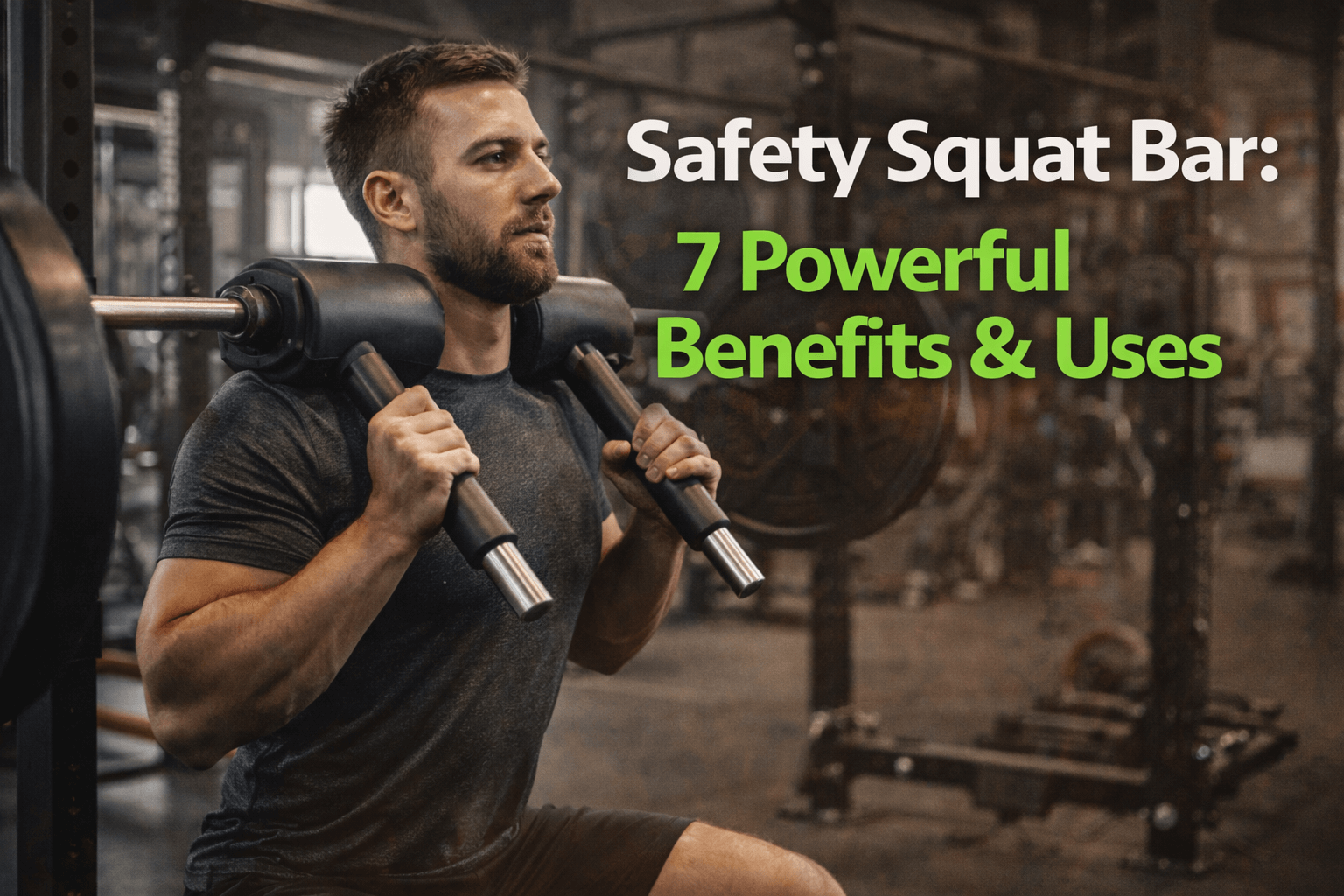
Strength training tools come and go, but some pieces of equipment earn their place in serious gyms for a reason. One such tool is the safety squat bar. Designed to reduce strain while improving squat mechanics, it has become popular among beginners, experienced lifters, and athletes alike.
Whether you’re dealing with shoulder mobility issues, lower back discomfort, or simply want to improve your squat performance, understanding how the safety squat bar works can help you train smarter and safer.
Table of Contents
What Is a Safety Squat Bar?
It is a specialized barbell designed with padded shoulder supports and forward-facing handles. Unlike a traditional straight bar, it shifts the load slightly forward and rests comfortably across the upper back.
This design allows lifters to squat without forcing their shoulders into extreme external rotation, making it especially helpful for people with mobility limitations or past injuries.
Key Design Features
- Thick shoulder padding for comfort
- Neutral-grip handles in front
- Cambered ends that change load distribution
- Heavier construction than standard barbells
How it Is Different from a Regular Barbell
The biggest difference lies in load placement and body mechanics.
With a straight bar:
- Shoulders must rotate back aggressively
- Upper back flexibility is crucial
- Wrist and elbow strain is common
With a safety squat bar:
- Hands stay in a neutral, relaxed position
- Torso stays more upright
- Upper-back engagement increases naturally
This makes it a popular alternative for people who want to squat heavy without joint discomfort.
Safety Squat Bar Weight: What You Should Know
One common question is about bar weight, and the answer may surprise beginners.
Most squat bars weigh 60–70 lbs (27–32 kg), compared to a standard Olympic barbell at 45 lbs (20 kg).
Why the Extra Weight Matters
- Changes total load calculations
- Requires bracing even with lighter plates
- Can feel harder despite lower plate weight
💡 Tip: Always confirm the bar’s weight before loading plates, especially when tracking progress.
7 Powerful Benefits
1. Reduces Shoulder and Elbow Strain
The forward handles eliminate the need for shoulder flexibility, making squats pain-free for many lifters.
2. Improves Squat Depth
The upright torso position helps many people hit consistent depth without collapsing forward.
3. Builds Upper-Back Strength
The forward-loaded design forces the upper back to stay tight throughout the movement.
4. Safer for Injured or Aging Lifters
Those recovering from shoulder, wrist, or elbow injuries often find this bar more comfortable.
5. Enhances Core Engagement
Maintaining balance with a shifted center of gravity strengthens the core naturally.
6. Improves Squat Technique
Many coaches use the safety squat bar as a teaching tool to reinforce proper squat mechanics.
7. Adds Variety to Training
It introduces a new stimulus without changing the movement pattern completely.
Who Should Use it?
The safety squat bar isn’t just for advanced lifters. It suits a wide range of users.
Ideal for:
- Beginners learning squat mechanics
- Lifters with shoulder mobility issues
- Powerlifters during deload or accessory work
- Athletes focusing on posture and core strength
- Older adults training for longevity
How to Use this Bar Correctly
Step-by-Step Setup
- Position the bar securely on your upper back
- Grip the handles lightly (do not pull them down)
- Brace your core before unracking
- Sit down into the squat, keeping your chest tall
- Drive up through your mid-foot
Common Mistakes to Avoid
- Pulling too hard on the handles
- Leaning excessively forward
- Ignoring proper bracing
- Treating it exactly like a straight bar squat
Safety Squat Bar vs Traditional Squat Bar
Pros
- More joint-friendly
- Better posture support
- Comfortable grip
- Ideal for accessory training
Cons
- Heavier bar weight
- Not available in all gyms
- Slight learning curve
For many lifters, the pros far outweigh the cons—especially when joint health is a priority.
Do you want to know the science behind the squats? Explore here
Titan Safety Squat Bar: Is It Worth It?
The Titan safety squat bar is one of the most popular models available today, known for its solid construction and affordability.
Why Lifters Choose It
- Durable steel build
- Comfortable padding
- Balanced camber design
- Suitable for home and commercial gyms
While premium brands exist, Titan offers strong value for lifters looking for performance without overspending.
Best Exercises You Can Do with this Bar
The bar isn’t limited to just squats.
Effective Movements Include:
- Safety squat bar squats
- Box squats
- Good mornings
- Lunges
- Hatfield squats
Using it for accessory work can reduce joint stress while keeping training intensity high.
FAQs: People Also Ask
Is a safety squat bar good for beginners?
Yes. It helps beginners maintain better posture and reduces strain on the shoulders and wrists.
How much does this bar weigh?
Most models weigh between 60 and 70 lbs, heavier than standard barbells.
Can you lift heavy with a this bar?
Absolutely. Many lifters squat heavy with it, though loads may feel different due to balance changes.
Is it better than a regular squat bar?
Not better—just different. It’s ideal for joint comfort, technique work, and variation.
Does it help with lower back pain?
By encouraging an upright torso and better bracing, it can reduce stress on the lower back for some lifters.
Final Thoughts: Is the Safety Squat Bar Worth Using?
The safety squat bar is more than a comfort-focused tool—it’s a performance enhancer when used correctly. By reducing joint strain, improving posture, and strengthening the upper back, it allows lifters to squat consistently without pain.
Whether you’re rehabbing an injury, improving technique, or simply adding variety to your training, this bar deserves a place in your program.
Key takeaway: If squatting hurts your shoulders or limits your progress, switching to a safety squat bar could be the smartest move you make.
Our other blogs:
Explore more helpful guides to support a healthy lifestyle for your family.