- Follow us:


Night Sweats Men: Causes, Symptoms, and When to Worry
22/01/2026
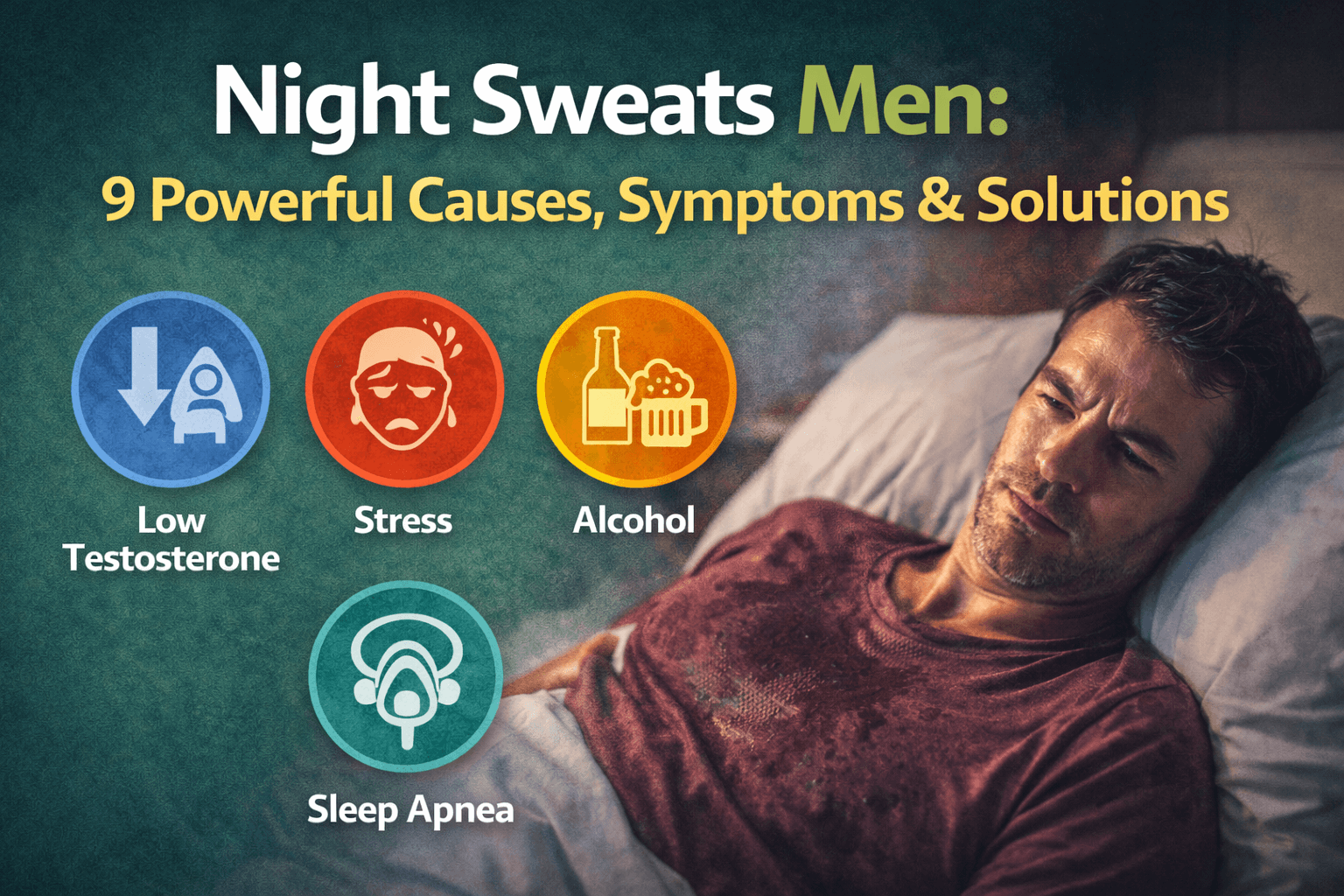
Waking up drenched in sweat can be alarming, especially when the room isn’t hot. Night sweats men experience are more common than many realize and can range from harmless lifestyle triggers to underlying health concerns. While occasional sweating during sleep is normal, frequent or severe episodes deserve attention.
This guide breaks down what night sweats are, what causes night sweats, why men experience them differently, and when it’s time to seek medical advice.
Table of Contents
What Are Night Sweats?
Night sweats refer to excessive sweating during sleep that soaks clothing or bedding and is not caused by external heat. Unlike mild perspiration, these episodes can wake you up and disrupt sleep quality.
Key signs include:
- Waking up with damp or soaked sheets
- Chills after sweating episodes
- Repeated occurrences several nights a week
- Fatigue due to poor sleep
Night Sweats Men vs Women: Is There a Difference?
While hormonal changes are often discussed in women, night sweats men experience are usually linked to different triggers.
Common differences:
- Men often experience night sweats due to stress, alcohol, medications, or infections
- Women more commonly associate night sweats with menopause or postpartum night sweats
- Men may ignore symptoms longer, delaying diagnosis
Understanding these differences helps in identifying the root cause faster.
What Causes Night Sweats in Men?
Night sweats can stem from a variety of factors. Here are the most common and medically known causes.
1. Hormonal Imbalances
Low testosterone (often called “Low T”) can disrupt the body’s temperature regulation.
Signs of hormone-related night sweats:
- Reduced libido
- Mood changes
- Fatigue
- Muscle loss
2. Stress and Anxiety
Chronic stress keeps the nervous system in fight-or-flight mode, raising body temperature at night.
Stress-related symptoms may include:
- Racing thoughts before sleep
- Shallow breathing
- Frequent awakenings
3. Alcohol Consumption
Alcohol widens blood vessels, increasing heat loss and triggering sweating.
Night sweats men experience after drinking are often:
- More intense after binge drinking
- Paired with dehydration
- Worse in warm rooms
4. Infections
Certain infections can cause fever-related sweating during sleep.
Examples include:
- Tuberculosis
- HIV
- Endocarditis
Persistent night sweats accompanied by fever or weight loss should never be ignored.
5. Medications
Some prescription drugs list night sweats as a side effect.
Common culprits:
- Antidepressants
- Blood pressure medications
- Steroids
- Fever-reducing drugs
6. Sleep Apnea
Men with sleep apnea often wake up sweating due to repeated breathing interruptions.
Warning signs:
- Loud snoring
- Gasping for air during sleep
- Morning headaches
7. Diet and Spicy Foods
Eating spicy or heavy meals close to bedtime raises core body temperature.
Trigger foods include:
- Chili peppers
- Hot sauces
- Caffeine
- Sugary snacks
8. Room Temperature and Bedding
Sometimes, the cause is purely environmental.
Check for:
- Heavy blankets
- Poor ventilation
- Synthetic fabrics trapping heat
9. Underlying Medical Conditions
In rare cases, night sweats men experience may be linked to:
- Diabetes (especially low blood sugar at night)
- Thyroid disorders
- Certain cancers
Postpartum Night Sweats: Why Are They Mentioned Here?
Although postpartum night sweats primarily affect women, they are sometimes searched alongside men’s night sweats due to shared hormonal mechanisms. Understanding these differences prevents confusion and misdiagnosis.
When Should Men Worry About Night Sweats?
Night sweats men should not worry unnecessarily as occasional sweating isn’t dangerous. However, consult a doctor if night sweats are:
- Occurring multiple times a week
- Accompanied by fever or unexplained weight loss
- Paired with chest pain or breathing issues
- Disrupting sleep long-term
How to Reduce Night Sweats Naturally
Lifestyle changes that help:
- Maintain a cool bedroom (18–22°C)
- Avoid alcohol and spicy foods before bed
- Practice stress management techniques
- Wear breathable cotton sleepwear
- Stay hydrated throughout the day
Medical Treatment Options
Depending on the cause, treatments may include:
- Hormone therapy
- Medication adjustments
- CPAP therapy for sleep apnea
- Treating underlying infections
A personalized approach works best.
Does night sweats common in young children and babies? Find out here.
Pros and Cons of Ignoring Night Sweats
Pros
- No immediate medical visits
- Less anxiety for mild cases
Cons
- Delayed diagnosis
- Worsening underlying conditions
- Long-term sleep disruption
Frequently Asked Questions (FAQs)
Are night sweats common in men?
Yes. Night sweats men experience are more common than reported, especially with stress, alcohol use, or sleep disorders.
Can dehydration cause night sweats?
Yes, dehydration can interfere with temperature regulation, leading to sweating during sleep.
Do night sweats mean low testosterone?
Not always, but hormonal imbalance is a common contributor.
What causes night sweats without fever?
Stress, alcohol, medications, or room temperature are common non-fever causes.
Can exercise too late cause night sweats?
Yes. Intense workouts close to bedtime can elevate body temperature for hours.
Conclusion: Key Takeaways for Men
Night sweats are your body’s way of signaling imbalance. While night sweats men experience are often linked to lifestyle factors, persistent episodes should not be ignored. Paying attention early can protect sleep quality, energy levels, and overall health.
If night sweats continue despite lifestyle changes, consulting a healthcare professional is the smartest next step.
Our other blogs:
Explore more helpful guides to support a healthy lifestyle for your family.