- Follow us:


Night Sweats COVID: Causes, Symptoms, and What They Mean
28/01/2026
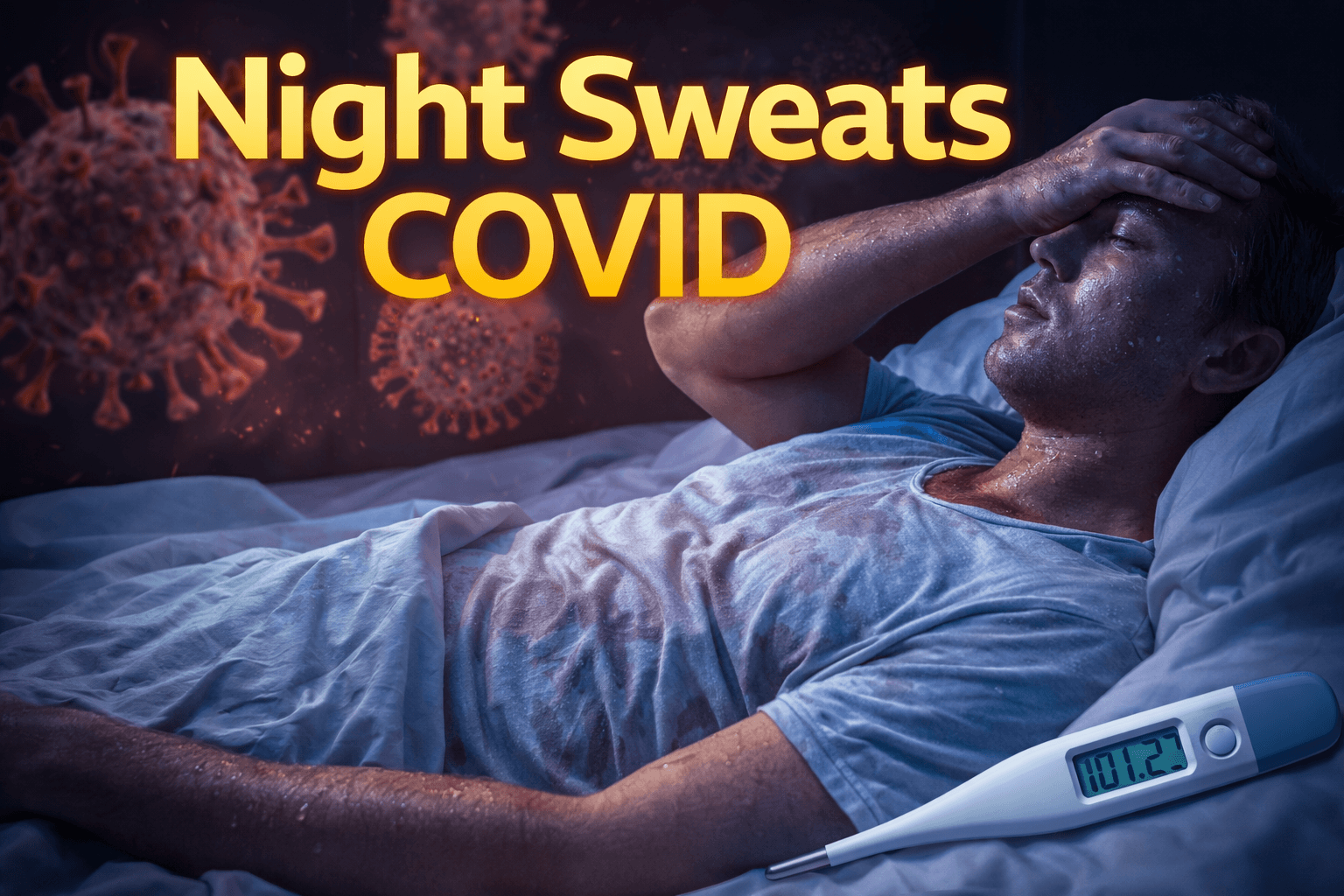
Waking up drenched in sweat can be alarming, especially if you’ve recently been sick or exposed to a virus. Many people have reported night sweats COVID symptoms during infection or recovery, leading to confusion and concern.
While sweating at night isn’t always dangerous, understanding what triggers it—and when it may signal something more—can help you respond calmly and appropriately.
Table of Contents
What Are Night Sweats?
Night sweats are episodes of excessive sweating during sleep that soak your clothes or bedsheets, even when the room temperature is cool.
They are different from normal sweating caused by:
- Heavy blankets
- Warm weather
- Physical activity before bed
Instead, night sweats usually point to internal changes in the body, such as illness, hormonal shifts, or immune responses.
Can Night Sweats COVID Be a Symptom?
Yes, night sweats COVID has been reported as a symptom by many patients during both active infection and recovery. While it is not among the most common signs like fever or cough, it does occur often enough to be medically recognized.
For some people, night sweating appears:
- Alongside fever
- During the recovery phase
- As part of post-viral symptoms
What Causes Night Sweats During COVID?
Several biological processes can explain why COVID may trigger sweating at night.
1. Immune System Activation
When the body fights a viral infection, it releases inflammatory chemicals. These can temporarily raise body temperature, leading to sweating—especially during rest.
2. Fever Fluctuations at Night
Body temperature naturally rises during sleep. Even low-grade fever can cause night sweats COVID patients often describe.
3. Nervous System Changes
COVID may affect the autonomic nervous system, which controls sweating, heart rate, and temperature regulation.
4. Post-Infection Adjustment
After recovery, the body may take time to normalize, leading to lingering symptoms such as fatigue and sweating.
How Long Do Night Sweats COVID Last?
There is no fixed timeline, but patterns are commonly seen:
- During infection: A few days to a week
- Early recovery: One to three weeks
- Post-COVID cases: Symptoms may appear intermittently for longer
If sweating gradually improves, it’s usually a sign of healing. Persistent symptoms deserve attention.
Night Sweats COVID vs Night Sweats Before Period
Not all night sweating is illness-related. Hormonal changes can also cause similar symptoms.
Night sweats before period:
- Occur a few days before menstruation
- Are linked to estrogen changes
- Usually stop once periods begin
- Do not involve fever or infection symptoms
Key difference:
If sweating occurs outside your normal menstrual cycle or alongside illness symptoms, night sweats COVID may be a more likely explanation.
Do you want to know more about COVID vaccines? Explore here.
Other Possible Causes of Night Sweats
If COVID is ruled out, sweating during sleep may be linked to:
- Anxiety or chronic stress
- Acid reflux
- Certain medications
- Blood sugar fluctuations
- Hormonal changes
- Other infections
This is why tracking symptoms and timing is important.
When Are Night Sweats a Red Flag?
Seek medical advice if night sweats are accompanied by:
- Persistent fever
- Shortness of breath
- Unexplained weight loss
- Chest pain
- Severe fatigue
- Symptoms lasting more than 3–4 weeks
These signs may indicate complications or another underlying condition.
How to Manage Night Sweats at Home
While the body recovers, simple steps can help reduce discomfort.
Sleep environment tips:
- Keep the room cool
- Use breathable bedding
- Avoid heavy blankets
- Wear light cotton sleepwear
Lifestyle habits:
- Stay hydrated
- Avoid alcohol and spicy food at night
- Limit caffeine
- Practice relaxation before bedtime
Should You Test for COVID?
If night sweats appear along with symptoms such as:
- Cough
- Fever
- Body aches
- Sore throat
- Loss of smell or taste
Testing can help confirm whether night sweats COVID is the cause and guide proper care.
Frequently Asked Questions
Are night sweats a common COVID symptom?
They are less common than fever or cough but are reported by many patients.
Can night sweats occur after COVID recovery?
Yes. Some people experience night sweats during the post-recovery phase.
Are night sweats before period related to COVID?
No. Hormonal night sweats follow a predictable cycle and are not linked to infection.
Should I worry about night sweats COVID?
Occasional sweating is usually harmless, but persistent or severe symptoms should be evaluated.
Final Thoughts
Night sweating can be unsettling, especially when linked to illness. Night sweats COVID symptoms are usually temporary and reflect the body’s immune response. Paying attention to patterns, duration, and accompanying signs helps determine when reassurance is enough—and when medical advice is needed.
Our other blogs:
Explore more helpful guides to support a healthy lifestyle for your family.