- Follow us:


Mosquito Bite: Causes, Relief, and How to Avoid Complications
31/01/2026
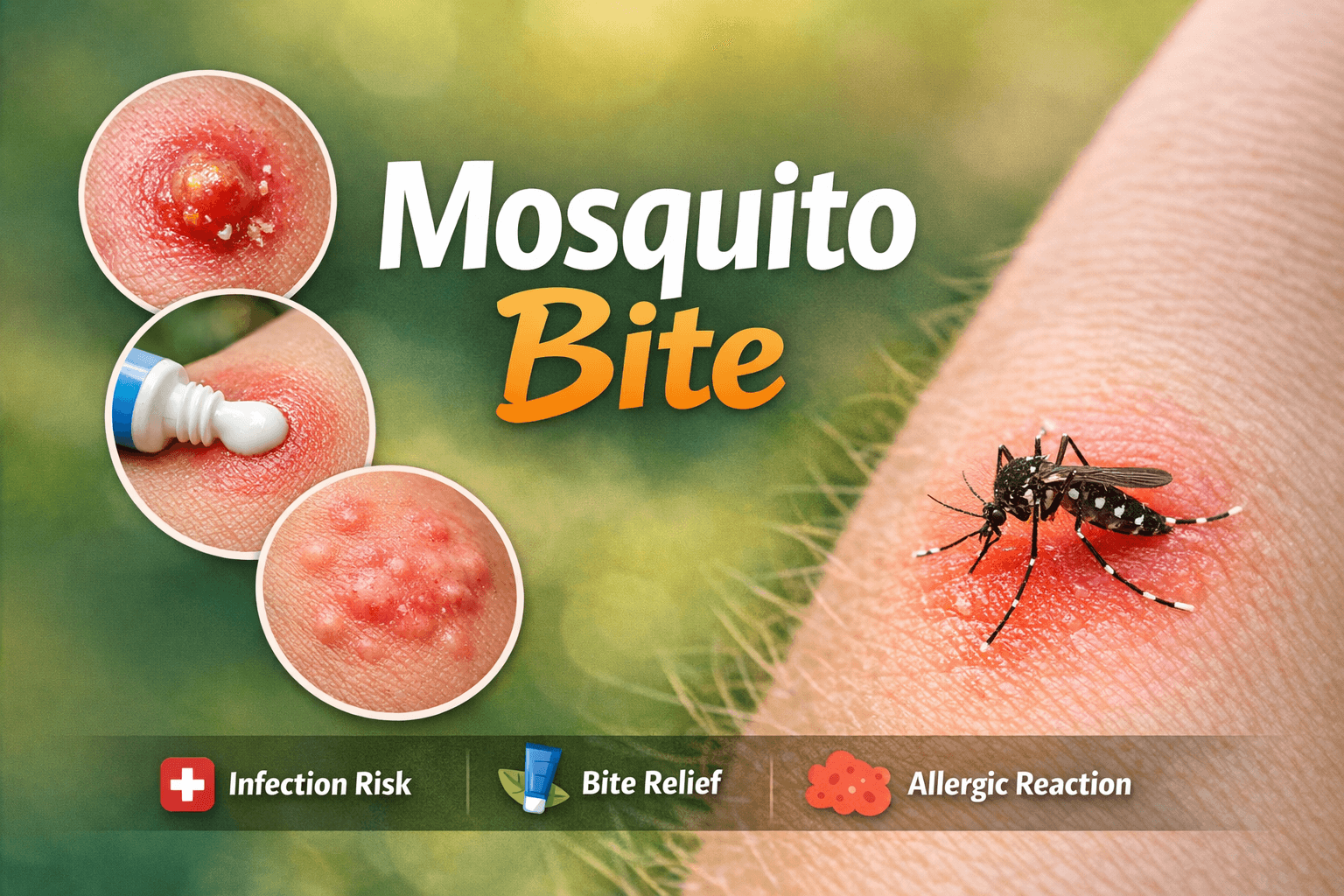
Mosquito bites are a common nuisance, especially during the rainy season or in areas with stagnant water. While most bites are harmless, they can cause itching, swelling, and in some cases, allergic reactions or infections. Understanding how to manage and prevent mosquito bites can save you from discomfort and potential health risks.
Table of Contents
What Happens When a Mosquito Bites You?
When a mosquito bites, it pierces the skin using its needle-like mouthpart called a proboscis. It injects saliva containing anticoagulants to prevent your blood from clotting. This saliva triggers your immune system to react, causing:
- Redness and swelling
- Itching
- Small bumps (papules)
Most bites heal on their own within a few days. However, some can become infected or trigger allergic reactions.
Common Types of Bite Reactions
1. Mild Reactions
Most people experience mild reactions like redness, itching, and swelling at the bite site. This usually lasts 1–2 days.
2. Allergic Reactions
Some individuals develop an allergy, which can cause:
- Large, itchy bumps (Skeeter syndrome)
- Blistering at the bite site
- Fever or fatigue in severe cases
Allergic reactions are rare but may require medical attention if swelling is excessive or accompanied by other symptoms.
3. Infected Bite
Scratching a bite too much can break the skin and lead to an infection. Signs of infection include:
- Pus or yellowish discharge
- Increased redness and warmth around the bite
- Pain or tenderness
- Red streaks spreading from the bite
Infected bites may need antibiotic treatment, so it’s important to monitor the site closely.
Quick Relief Tips
Whether your bite is itchy or inflamed, there are several ways to find relief:
Home Remedies
- Cold compress: Reduces swelling and numbs itching.
- Aloe vera gel: Soothes the skin and promotes healing.
- Honey: Natural antibacterial properties can help prevent infection.
- Oatmeal paste: Mix oatmeal with water to calm irritation.
Want to explore some more home remedies? Check out here.
Over-the-Counter Options
- Hydrocortisone cream: Reduces inflammation and itching.
- Antihistamine tablets or cream: Helps with allergic reactions.
- Calamine lotion: Provides a cooling effect and relieves itchiness.
Pro tip: Avoid scratching, as it increases the risk of infection. Instead, gently pat or apply a cold compress.
Prevention
Prevention is always better than treatment. Here’s how you can minimize mosquito bites:
Personal Protection
- Wear long sleeves and pants, especially during dawn and dusk when mosquitoes are most active.
- Use mosquito repellents containing DEET, picaridin, or oil of lemon eucalyptus.
- Apply insect repellent to exposed skin and clothing.
Home and Environmental Measures
- Use mosquito nets over beds, cribs, and windows.
- Remove standing water where mosquitoes breed, such as in plant pots, buckets, or clogged drains.
- Install screens on doors and windows.
- Use mosquito traps or indoor insecticides if necessary.
Tip: Mosquitoes are more active in humid and warm conditions, so extra precautions during rainy seasons are important.
Mosquito Bite Allergies vs. Normal Bites
| Feature | Normal Bite | Mosquito Bite Allergy |
|---|---|---|
| Redness & swelling | Mild | Severe and larger than normal |
| Itching | Moderate | Intense |
| Healing time | 1–2 days | Several days to weeks |
| Other symptoms | Usually none | Fever, fatigue, or blistering |
If you notice unusually severe reactions after a bite, consult a healthcare professional.
When to Seek Medical Attention
Most mosquito bites are harmless, but see a doctor if you experience:
- Severe allergic reactions (trouble breathing, dizziness, swelling of face or lips)
- Signs of infection (pus, spreading redness, warmth, pain)
- Fever, body aches, or flu-like symptoms following a bite (could indicate mosquito-borne diseases)
Myths and Facts
Myth 1: Only dirty people get mosquito bites
Fact: Mosquitoes are attracted to body heat, sweat, and carbon dioxide—cleanliness does not affect bites.
Myth 2: Mosquito bites spread diseases immediately
Fact: Only certain mosquitoes can transmit diseases like dengue, malaria, or Zika, and only if they are already carrying the pathogen.
Myth 3: Scratching helps heal faster
Fact: Scratching can worsen inflammation and may lead to an infected mosquito bite.
Practical Tips to Reduce Mosquito Bite Discomfort
- Keep fingernails short to avoid skin damage when itching.
- Apply anti-itch creams early to prevent scratching.
- Use essential oils like lavender or tea tree oil as natural repellents.
- Stay indoors during peak mosquito activity hours (dawn and dusk).
- Hydrate and rest well to support the immune system’s response.
People Also Ask (FAQ)
Q1: How long does a bite last?
A: Most bites last 1–2 days, but allergic reactions may persist longer.
Q2: Can mosquito bites get infected?
A: Yes, excessive scratching can break the skin and lead to an infected bite, requiring treatment.
Q3: What is the best home remedy for mosquito bite relief?
A: Cold compress, aloe vera, honey, or oatmeal paste are effective natural remedies.
Q4: How do I know if I’m allergic to mosquito bites?
A: Severe swelling, large itchy bumps, blistering, or systemic symptoms like fever indicate a mosquito bite allergy.
Q5: Are mosquito bites dangerous?
A: Most are harmless, but infected bites or bites from disease-carrying mosquitoes can be serious.
Conclusion: Key Takeaways
Mosquito bites are a common problem, but they don’t have to ruin your day. By understanding the different types of reactions, practicing proper bite relief techniques, and taking preventive measures, you can minimize discomfort and avoid complications.
- Avoid scratching to prevent infection.
- Use home remedies and over-the-counter treatments for relief.
- Protect yourself with clothing, repellents, and environmental measures.
- Seek medical attention for severe allergic reactions or infections.
With awareness and proactive steps, you can enjoy the outdoors without letting mosquito bites affect your health.
Our other blogs:
Explore more helpful guides to support a healthy lifestyle for your family.