- Follow us:


Mole Removal: Safe Methods, Costs, and What to Expect
30/01/2026
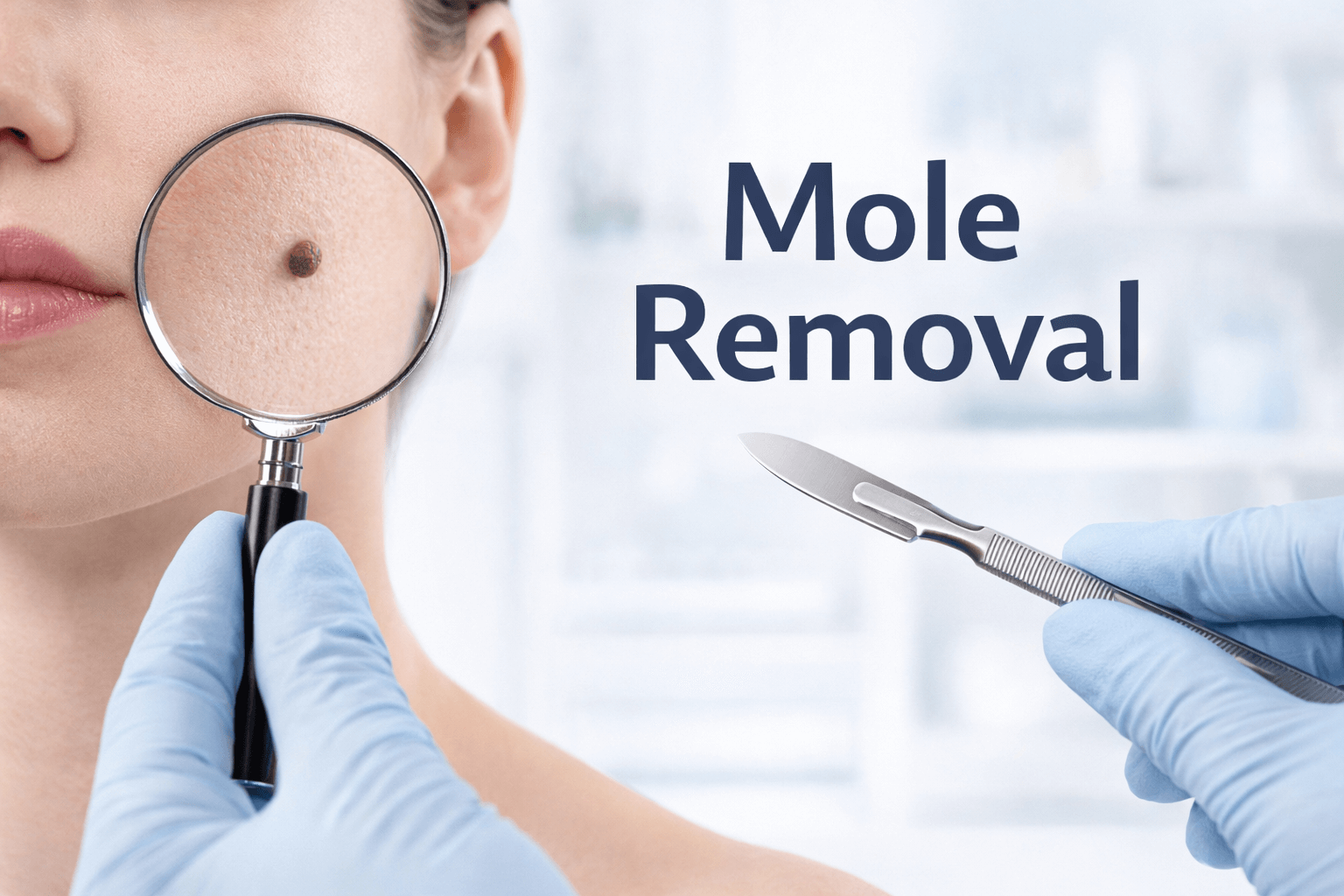
Moles are common skin growths that most people have at some point in life. While many moles are harmless, some people choose mole removal for cosmetic reasons, comfort, or medical concerns. Understanding your options can help you make a safe and informed decision.
This guide explains different mole removal methods, costs, risks, and what results you can realistically expect.
Table of Contents
What Is Mole Removal?
It is a medical or cosmetic procedure used to eliminate a mole from the skin. Moles can vary in size, color, and texture, and not all require treatment. Removal is typically recommended when a mole:
- Changes size, shape, or color
- Becomes painful or itchy
- Bleeds unexpectedly
- Causes cosmetic concern
A healthcare professional can determine whether a mole should be removed and which method is appropriate.
Common Types of Moles
Benign Moles
These are non-cancerous and usually stable over time.
Atypical Moles
Irregular in shape or color and may require closer monitoring.
Congenital Moles
Present at birth and may vary in size.
Raised vs Flat Moles
Raised moles are often easier to remove than flat ones, depending on location.
Popular Methods
Surgical Excision
- Performed by a dermatologist
- Mole is cut out and stitched
- Suitable for deeper or suspicious moles
Pros: Complete removal, allows biopsy
Cons: May leave a small scar
Shave Removal
- Mole is shaved flat from the skin surface
- No stitches required
Pros: Quick procedure, minimal downtime
Cons: Mole may grow back in some cases
Laser Mole Removal
Laser technique uses focused light energy to break down pigment in the mole.
Best for:
- Small, flat, non-cancerous moles
- Areas where scarring should be minimal
Pros: Minimal bleeding, faster healing
Cons: Not suitable for all mole types
Mole Removal Creams (Over-the-Counter)
These creams claim to fade or remove moles over time.
Important note:
Many dermatologists do not recommend creams due to:
- Risk of skin irritation
- Incomplete removal
- No medical evaluation of the mole
Cost: What Influences the Price?
Mole removal cost varies based on several factors:
- Size and depth of the mole
- Location on the body
- Removal method used
- Clinic or dermatologist expertise
Average Cost Range
- Simple procedures: lower cost
- Laser treatments: moderate cost
- Surgical removal with biopsy: higher cost
Medical removal may be covered by insurance if there is a health concern.
Is Mole Removal Safe?
When performed by a qualified professional, removal of moles is generally safe. However, risks can include:
- Mild bleeding
- Temporary redness or swelling
- Infection (rare with proper care)
- Scarring
Avoid home remedies or unverified products, especially for moles that change in appearance.
What to Expect After Mole Removal
Healing Time
- Minor procedures: a few days
- Surgical removal: 1–2 weeks
Aftercare Tips
- Keep the area clean and dry
- Avoid sun exposure during healing
- Follow your provider’s care instructions
Proper aftercare reduces scarring and speeds recovery.
When Should You See a Doctor?
Seek medical advice if a mole:
- Grows rapidly
- Changes color or shape
- Becomes painful or bleeds
- Appears suddenly in adulthood
These could be warning signs that require evaluation.
Do you want to know about Skin Moles? Explore here.
Frequently Asked Questions
Is mole removal painful?
Most procedures involve local anesthesia, so discomfort is minimal.
Can moles grow back after removal?
Some moles may return if not fully removed, especially after shave methods.
Is removing moles using laser permanent?
It can be permanent for suitable moles, but results vary.
Are removal creams safe?
Many are unregulated and may cause skin damage. Medical evaluation is safer.
Key Takeaways
- Mole removal can be cosmetic or medical
- Laser and surgical options are the safest choices
- Costs vary based on mole type and method
- Always consult a qualified professional
- Avoid DIY or unverified treatments
Choosing the right approach ensures both safety and better long-term results.
Our other blogs:
Explore more helpful guides to support a healthy lifestyle for your family.