- Follow us:


Goblet Squat: Benefits, Proper Form, and Variations
18/01/2026
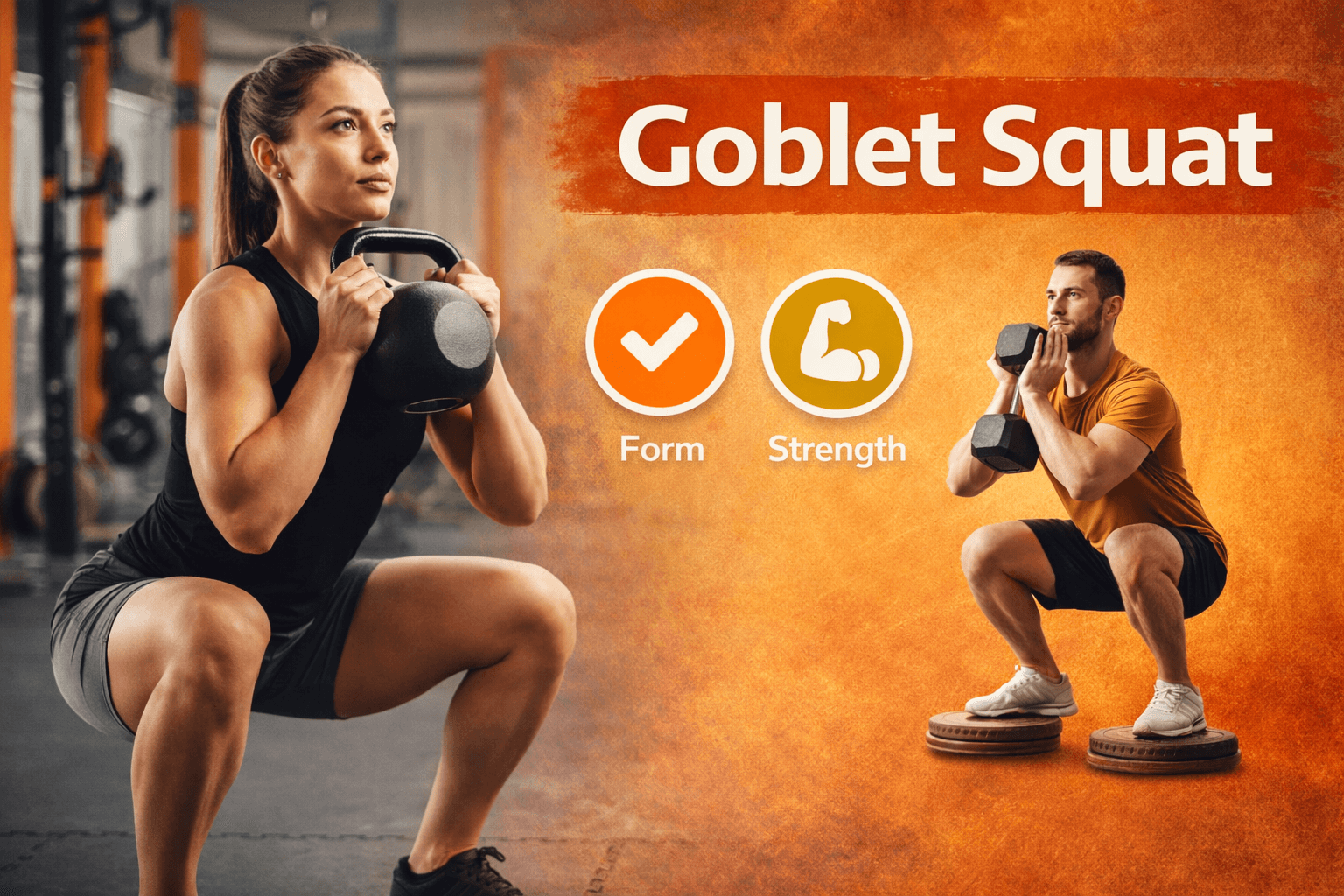
The goblet squat is one of the most effective lower-body exercises for building strength, improving mobility, and learning proper squat mechanics. Whether you’re new to training or looking to refine your technique, this movement deserves a place in your workout routine.
Unlike barbell squats, the goblet squat is beginner-friendly and easier on the joints while still delivering powerful results. It helps develop strong legs, a stable core, and better posture—making it a favorite among fitness coaches and physical therapists alike.
Table of Contents
What Is a Goblet Squat?
This squat variation is performed while holding a weight—usually a dumbbell or kettlebell—close to your chest. The weight placement helps counterbalance your body, allowing for better depth and posture, making this squat an excellent addition to any workout routine.
This exercise closely mimics natural movement patterns, which is why it’s often recommended for beginners and those relearning squat form after injury.
Why this Squat Called a Goblet
The name comes from the way you hold the weight, similar to holding a goblet with both hands at chest level.
Muscles Worked During a Goblet Squat
This squat is a full lower-body movement with added core engagement.
Primary muscles worked:
- Quadriceps (front of thighs)
- Glutes
- Hamstrings
Secondary muscles worked:
- Core (abs and obliques)
- Lower back stabilizers
- Calves
- Upper back and shoulders (for posture support)
Key benefits
1. Improves Squat Form
The front-loaded weight naturally encourages an upright torso, making it easier to maintain proper squat form.
2. Builds Functional Strength
This movement strengthens muscles used in everyday activities like sitting, lifting, and climbing stairs.
3. Enhances Mobility
This squats improve hip, ankle, and knee mobility when performed through a full range of motion.
4. Core Engagement
Holding the weight close to your chest forces your core to stay tight throughout the movement.
5. Beginner-Friendly Yet Effective
You don’t need heavy weights or advanced equipment to benefit from these squats.
How to Do a Goblet Squat (Step-by-Step)
Mastering proper squat form is key to getting results and avoiding injury.
Step-by-Step Instructions:
- Hold a dumbbell or kettlebell at chest level with both hands
- Stand with feet shoulder-width apart, toes slightly turned out
- Brace your core and keep your chest upright
- Push your hips back and bend your knees to lower into a squat
- Descend until your elbows touch the inside of your knees (or as deep as comfortable)
- Push through your heels to return to standing
Breathing tip:
Inhale as you lower, exhale as you stand up.
Common Mistakes to Avoid
Even though the squat is beginner-friendly, form mistakes can still happen.
❌ Rounding the Back
Incorporating this squat into your routine can enhance your overall fitness and strength.
Keep your chest up and back straight during the whole movement.
❌ Letting Knees Cave In
Push your knees slightly outward to protect your joints.
❌ Holding the Weight Too Far Away
The weight should stay close to your chest, not extended forward.
❌ Lifting Heels Off the Floor
Maintain full foot contact to improve balance and stability.
Goblet Squat vs Barbell Squat
| Goblet Squat | Barbell Squat |
|---|---|
| Beginner-friendly | Advanced technique |
| Easier on joints | Heavier loading |
| Improves mobility | Focuses on max strength |
| Minimal equipment | Requires rack & barbell |
Both have their place, but goblet squats are ideal for learning, warm-ups, and functional strength.
Want to know about other toning and strengthening exercises? Click here.
Elevated Goblet Squat: When and Why to Use It
An elevated goblet squat involves placing your heels on a small platform or weight plate.
Benefits:
- Helps people with limited ankle mobility
- Allows deeper squat range
- Emphasizes quadriceps
- Reduces strain on lower back
Who Should Try It?
- Beginners struggling with squat depth
- People with tight calves or ankles
- Those rehabbing lower-body injuries (with guidance)
How Much Weight Should You Use?
Start light and focus on technique.
General guidelines:
- Beginners: 5–10 kg
- Intermediate: 12–20 kg
- Advanced: 24 kg or more (depending on strength)
Form always comes before weight.
Sets and Reps
For Beginners:
- 3 sets of 10–12 reps
For Strength:
- 4 sets of 6–8 reps (heavier weight)
For Endurance:
- 3–4 sets of 15–20 reps (lighter weight)
Who Should Do Goblet Squats?
The goblet squat is suitable for:
- Beginners learning squat mechanics
- Athletes improving mobility
- People training at home
- Older adults focusing on functional strength
Always consult a professional if you have existing joint or back issues.
Frequently Asked Questions (FAQs)
Is the goblet squat good for beginners?
Yes, it’s one of the best squat variations for beginners due to its balance and posture support.
Can goblet squats replace barbell squats?
They can be a great alternative, especially for home workouts or mobility-focused training.
Is this squat safe for knees?
When performed with proper form, these squats are knee-friendly and can strengthen surrounding muscles.
How often should I do it?
Most people should aim to do it 2 to 3 times each week.
Key Takeaways
- The goblet squat is a powerful, beginner-friendly lower-body exercise
- Proper squat form is essential for safety and results
- Variations like the elevated goblet squat improve mobility and depth
- Suitable for all fitness levels and easy to perform anywhere
If you’re looking for an exercise that builds strength, improves movement, and supports long-term joint health, the goblet squat is a smart choice.
Our other blogs:
Explore more helpful guides to support a healthy lifestyle for your family.