- Follow us:


4 Stages of Frozen Shoulder: Symptoms & Expert Recovery
14/01/2026
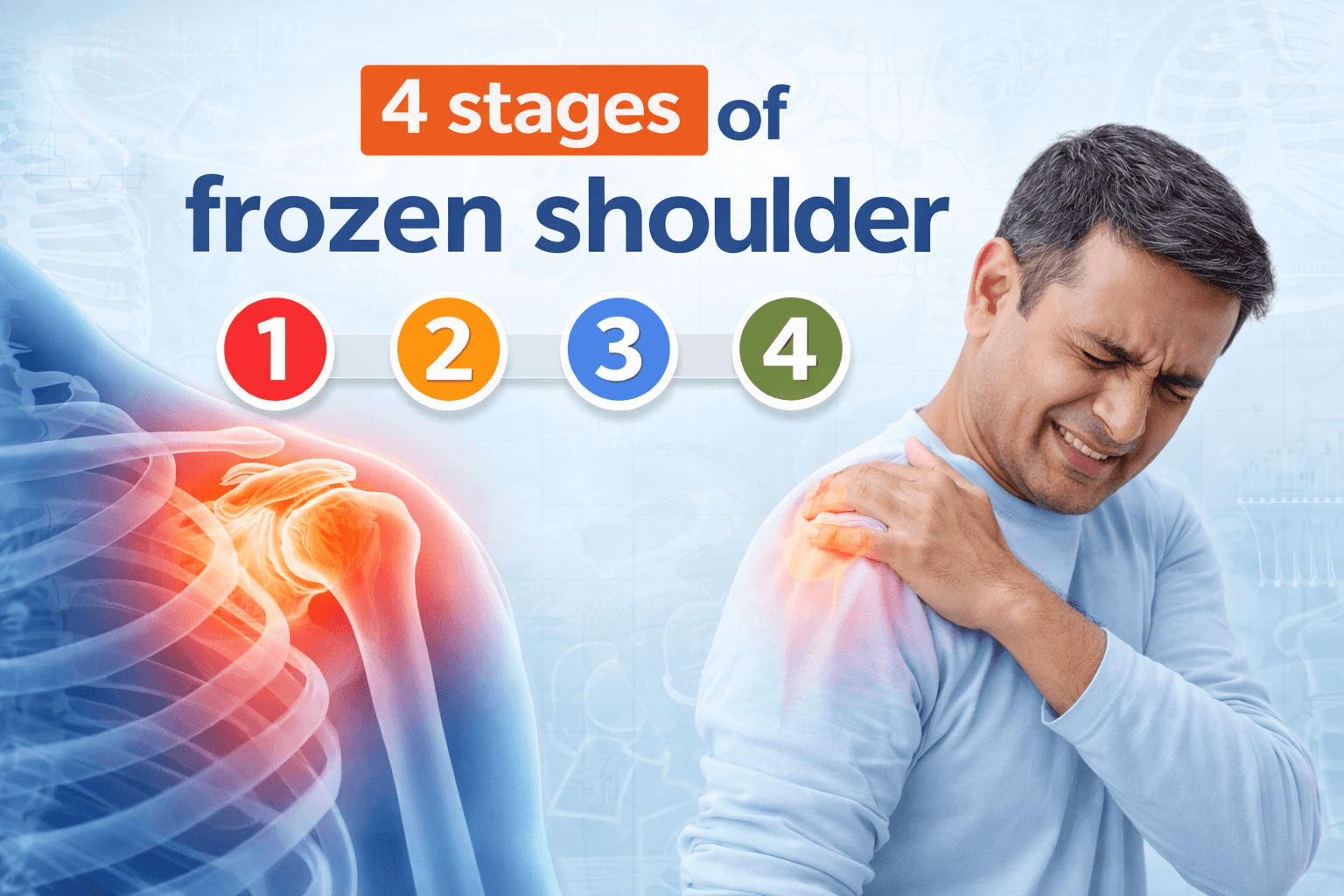
Frozen shoulder can quietly progress from mild discomfort to severe stiffness if left unaddressed. Many people struggle because they don’t realize the condition develops in phases. Knowing the 4 stages of frozen shoulder helps you identify symptoms early, manage pain properly, and avoid unnecessary frustration during recovery.
Whether your shoulder pain has just started or movement is already limited, understanding how frozen shoulder progresses gives you better control over treatment and expectations.
Table of Contents
What Is Frozen Shoulder?
Frozen shoulder, also called adhesive capsulitis, occurs when the connective tissue around the shoulder joint thickens and tightens. This restricts movement and causes pain that worsens over time.
The condition typically develops slowly and follows a predictable pattern known as the 4 stages of frozen shoulder, making early awareness especially important.
Why Understanding the 4 Stages of Frozen Shoulder Is Important
Recognizing which phase you’re in allows you to:
- Choose the right treatment approach
- Avoid exercises that may worsen pain
- Understand why progress feels slow at times
- Stay motivated through recovery
Although many sources mention the 3 stages of frozen shoulder, medical professionals increasingly rely on the 4 stages of frozen shoulder model to better explain functional recovery.
Overview of the 4 Stages of Frozen Shoulder
The condition generally progresses through the following phases:
- Freezing Stage (Pain-Dominant Phase)
- Frozen Stage (Stiffness-Dominant Phase)
- Thawing Stage (Gradual Recovery Phase)
- Functional Recovery Stage
Each stage has its own symptoms, challenges, and treatment focus.
Stage 1: Freezing Stage (Painful Phase)
This is the first and often the most uncomfortable phase of the 4 stages of frozen shoulder.
What Happens
Inflammation develops in the shoulder capsule, leading to increasing pain and gradual loss of movement.
Common Symptoms
- Persistent shoulder pain
- Pain that worsens at night
- Discomfort during sudden movements
- Early stiffness
Duration
6 weeks to 9 months
Practical Tip
Pain control is the priority in this stage. Gentle movements are helpful, but aggressive stretching can make symptoms worse.
Stage 2: Frozen Stage (Stiffness Phase)
As the condition progresses through the 4 stages of frozen shoulder, pain may lessen slightly, but stiffness becomes more pronounced.
What Happens
The shoulder capsule tightens further, severely limiting mobility.
Common Symptoms
- Marked loss of shoulder movement
- Difficulty dressing or reaching overhead
- Reduced pain at rest but discomfort at movement extremes
Duration
4 to 12 months
Practical Tip
Physiotherapy focused on controlled mobility is essential. Forcing movement usually slows recovery.
Stage 3: Thawing Stage (Recovery Phase)
This is a turning point within the 4 stages of frozen shoulder, where gradual improvement becomes noticeable.
What Happens
Inflammation reduces, and the shoulder capsule slowly loosens.
Common Symptoms
- Decreasing pain
- Improving range of motion
- Better tolerance for daily activities
Duration
6 months to 2 years
Practical Tip
Consistency matters more than intensity. Slow, regular exercises produce the best results.
Stage 4: Functional Recovery Stage
The final phase of the 4 stages of frozen shoulder focuses on restoring strength, coordination, and confidence.
What Happens
Shoulder movement returns close to normal, and pain is minimal or absent.
Common Symptoms
- Improved strength
- Near-normal flexibility
- Ability to resume daily and recreational activities
Practical Tip
Rehabilitation exercises help prevent recurrence and support long-term shoulder health.
3 Stages vs 4 Stages of Frozen Shoulder
Why Some Sources Mention 3 Stages
Traditionally, frozen shoulder was described using only freezing, frozen, and thawing stages.
Why the 4-Stage Model Is More Helpful
The 4 stages of frozen shoulder add clarity by highlighting the final functional recovery phase, which is critical for long-term outcomes.
How Long Does Recovery Take?
Recovery across the 4 stages of frozen shoulder typically takes between 18 months and 3 years, depending on:
- Early diagnosis
- Treatment consistency
- Underlying conditions like diabetes
- Activity level and posture habits
Treatment Options at Different Stages
Non-Surgical Approaches
- Pain-relief medications
- Physiotherapy
- Corticosteroid injections
- Heat or cold therapy
When Advanced Treatment Is Considered
- Persistent stiffness despite therapy
- Severe functional limitation
- Failure of conservative treatment
Pros and Cons of Early Intervention
Pros
- Shorter recovery timeline
- Reduced stiffness
- Better functional outcomes
Cons
- Requires patience and consistency
- Progress may feel slow initially
Do you know a frozen shoulder is more common in people with thyroid disease? Click here to know more.
FAQs: People Also Ask
Which of the 4 stages of frozen shoulder is most painful?
The freezing stage is usually the most painful due to active inflammation.
Can frozen shoulder heal on its own?
Yes, but without treatment, recovery through the 4 stages of frozen shoulder may take longer.
Is frozen shoulder common in diabetics?
Yes, diabetics are at higher risk and often experience prolonged recovery.
Can exercises worsen frozen shoulder?
Incorrect or aggressive exercises can worsen symptoms, especially in early stages.
Key Takeaways
- Frozen shoulder progresses through 4 predictable stages
- Pain dominates early stages; stiffness follows
- Recovery is gradual but achievable
- Proper guidance improves outcomes significantly
- Most people regain near-normal shoulder function
Our other blogs:
Explore more helpful guides to support a healthy lifestyle for your family.