- Follow us:


High Protein Yogurt: Benefits, Best Brands & Easy Bowl Ideas
04/02/2026
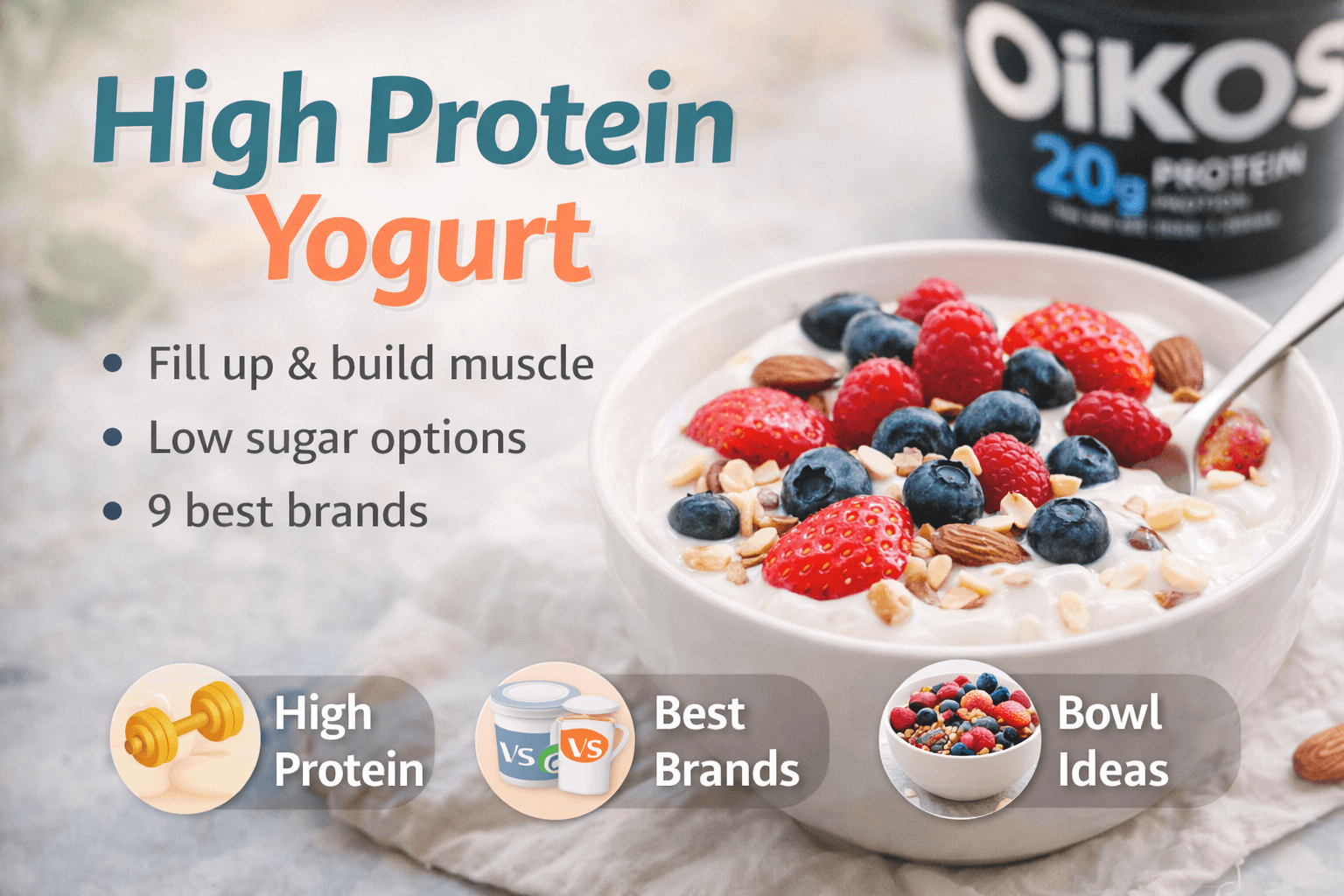
If you’re trying to eat healthier, build muscle, or simply stay full for longer, high protein yogurt is one of the easiest foods to add to your routine. It’s creamy, versatile, and packed with nutrients that support everyday health.
From quick breakfasts to post-workout snacks, this fits into almost any lifestyle. But with so many options on store shelves, it’s natural to wonder which types are actually worth buying and how to enjoy them without getting bored.
Let’s break it down in a simple, practical way.
Table of Contents
What Is High Protein Yogurt?
This is a kind of yogurt that contains more protein than regular yogurt. This higher protein content usually comes from:
- Straining out extra whey (as in Greek yogurt)
- Adding milk protein concentrates
- Using specific fermentation processes
On average, high protein yogurt contains 10–20 grams of protein per serving, compared to 5–7 grams in regular yogurt.
Why It Is So Popular
Protein plays a key role in many body functions, and yogurt makes it easy to consume without cooking or supplements.
Key Benefits
- Helps keep you full for longer
- Supports muscle repair and growth
- Aids in weight management
- Supports gut health (when it contains live cultures)
- Convenient and easy to digest
This combination makes it popular among fitness enthusiasts, busy professionals, and health-conscious families alike.
High Protein vs Regular Yogurt
| Feature | High Protein Yogurt | Regular Yogurt |
|---|---|---|
| Protein content | Higher (10–20g) | Lower (5–7g) |
| Texture | Thicker, creamier | Thinner |
| Satiety | Keeps you full longer | Hunger returns sooner |
| Best for | Fitness, weight goals | General consumption |
Types of Yogurt with High Protein
Greek Yogurt
Greek yogurt is rich in protein because it’s made by straining the milk. It has a thick and tangy taste, and it can be used in many different ways.
Icelandic Yogurt (Skyr)
Even thicker than Greek yogurt, skyr offers high protein with lower fat content.
Drinkable Protein Yogurt
Great for on-the-go consumption, though some varieties contain added sugars.
Plant-Based Protein Yogurt
Made from soy or pea protein, suitable for vegans but protein quality may vary.
Popular Protein Rich Yogurt Brands to Know
When looking for high protein yogurt brands, check nutrition labels carefully.
Well-Known Options
- Oikos Protein Yogurt – Known for high protein content and smooth texture
- Chobani Greek Yogurt
- Siggi’s Skyr
- Fage Total
- Store-brand Greek yogurts with clean labels
Among these, Oikos protein yogurt is often chosen for its balanced taste, protein content, and availability.
How to Choose the Best Protein Yogurt
Not all products labeled “high protein” are equal.
What to Look For
- At least 10g protein per serving
- Minimal added sugar
- Short ingredient list
- Live and active cultures
- No artificial sweeteners (if possible)
What to Avoid
- High sugar content
- Artificial thickeners
- Excessive flavoring agents
Protein Yogurt Bowl Ideas (Easy & Filling)
A protein rich yogurt bowl is one of the simplest ways to enjoy yogurt while boosting nutrition.
Basic Protein Bowl Formula
- Protein rich yogurt base
- Fiber-rich fruit
- Healthy fats
- Crunch or texture
Simple Bowl Ideas
- Yogurt + berries + nuts + honey
- Yogurt + banana + peanut butter
- Yogurt + granola + seeds
- Yogurt + apple slices + cinnamon
These bowls work well for breakfast, snacks, or post-workout meals.
Is High Protein Yogurt Good for Weight Loss?
Yes, when used correctly.
Protein helps regulate appetite hormones and reduces unnecessary snacking. Pairing protein rich yogurt with fiber and healthy fats improves satiety even more.
However, portion size still matters, especially if the yogurt contains added sugars or toppings.
Is Protein Rich Yogurt Good for Muscle Building?
High protein yogurt provides amino acids that help repair muscle tissue after workouts. While it shouldn’t replace whole meals, it works well as:
- A post-workout snack
- A breakfast option
- A bedtime protein source
Can You Eat it Every Day?
For most people, yes.
Daily consumption is generally safe and beneficial, especially if you choose varieties with low sugar and natural ingredients. If you have lactose intolerance, lactose-free or plant-based versions may be better options.
Pros and Cons of High Protein Yogurt
Pros
- Convenient protein source
- Supports digestion
- Versatile for meals and snacks
- Suitable for many diets
Cons
- Some brands contain added sugar
- Can be more expensive
- Not all versions are equally nutritious
Find out some more protein meals for you. Click here.
Frequently Asked Questions (FAQ)
Is high protein yogurt better than protein powder?
For whole-food nutrition, yes. Yogurt provides protein along with probiotics, calcium, and vitamins.
Does high protein yogurt contain probiotics?
Most do, but always check the label for live cultures.
Is Oikos high protein yogurt healthy?
Yes, when consumed in moderation and chosen in low-sugar varieties.
Can kids eat high protein yogurt?
Yes, but avoid versions with excessive protein or artificial sweeteners.
Is high protein yogurt suitable for diabetics?
Plain, unsweetened options may be suitable, but it’s best to consult a healthcare provider.
Key Takeaways
- High protein yogurt is a convenient, nutrient-rich food
- It supports satiety, muscle health, and digestion
- Choose brands with clean ingredients and low sugar
- Yogurt bowls make it easy and enjoyable to consume daily
- Moderation and label reading are key
Adding high protein yogurt to your routine doesn’t have to be complicated — simple choices can make a big difference.
Our other blogs:
Explore more helpful guides to support a healthy lifestyle for your family.