- Follow us:


Pregnancy Acne: Causes, Safe Treatments, and What to Avoid
03/02/2026
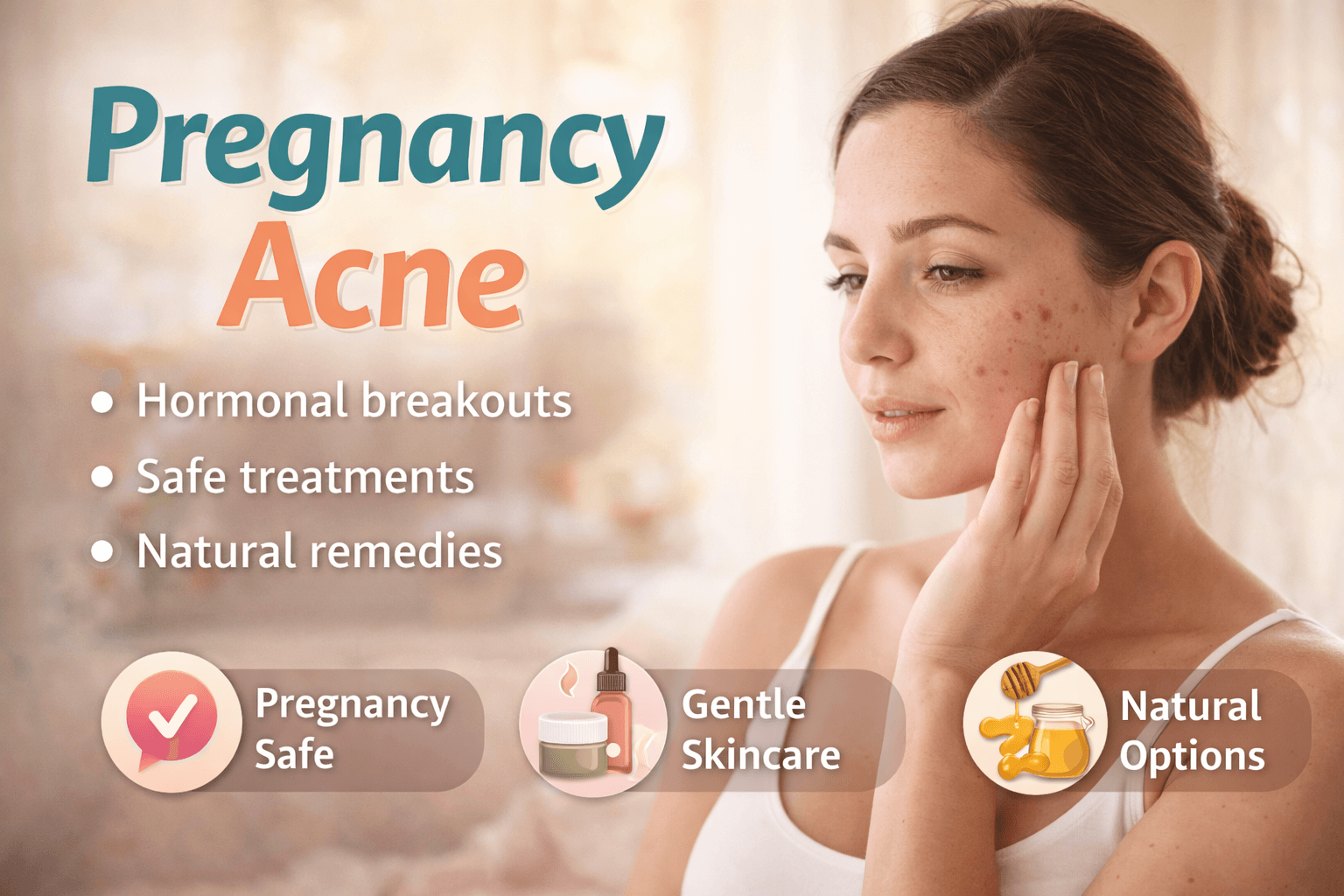
Pregnancy brings a lot of changes—glowing skin for some, unexpected breakouts for others. If you’re dealing with pregnancy acne, you’re far from alone. Many pregnant women experience acne even if they never had skin issues before.
The good news? Pregnancy acne is usually temporary and manageable with the right approach. The key is understanding what causes it and choosing treatments that are safe for both you and your baby.
Table of Contents
What Is Pregnancy Acne?
Pregnancy acne refers to breakouts that appear during pregnancy, most commonly in the first and second trimesters. It can show up on the face, chest, back, or shoulders and range from mild pimples to more persistent inflammatory acne.
Unlike typical adult acne, pregnancy acne is driven primarily by hormonal changes rather than poor skincare habits.
What are the Causes?
Hormonal Changes
The biggest trigger is an increase in progesterone. This hormone stimulates oil (sebum) production, which can clog pores and lead to breakouts.
When excess oil mixes with dead skin cells and bacteria, acne forms more easily.
Increased Oil Production
Even women with dry or balanced skin may notice oilier skin during pregnancy. This sudden change often catches people off guard and leads to new breakouts.
Stress and Lifestyle Changes
Pregnancy-related stress, sleep disruption, and changes in routine can all worsen acne. Stress increases cortisol levels, which can further stimulate oil production.
Skincare Products No Longer Working
Products that worked before pregnancy may suddenly feel too heavy or irritating. Hormonal shifts can make skin more sensitive, increasing the risk of clogged pores and inflammation.
When Does Pregnancy Acne Usually Start?
- First trimester: Most common time for flare-ups
- Second trimester: Often improves as hormones stabilize
- Third trimester: Can either clear up or return mildly
For many women, pregnancy acne improves after childbirth once hormone levels normalize.
Treatment Options
Treating acne during pregnancy requires extra care. Some common acne ingredients are not considered safe, so choosing gentle, pregnancy-safe options is essential.
Topical Treatments Considered Safer
Always check with a healthcare provider, but commonly accepted options include:
- Azelaic acid
- Low-strength benzoyl peroxide (used sparingly)
- Glycolic acid in mild concentrations
These ingredients can clear out clogged pores and lower inflammation, and they don’t have any known dangers as long as they’re used the right way.
Gentle Daily Skincare Routine
A simple routine often works best during pregnancy.
Morning:
- Mild, fragrance-free cleanser
- Oil-free moisturizer
- Mineral sunscreen (zinc oxide or titanium dioxide)
Evening:
- Gentle cleanser
- Light moisturizer suitable for sensitive skin
Avoid over-cleansing, which can strip skin and trigger more oil production.
Natural Ways to Manage Pregnancy Acne
If you prefer minimal products, lifestyle adjustments can make a big difference.
- Wash pillowcases frequently
- Avoid touching or picking at pimples
- Keep hair clean and off your face
- Stay hydrated
- Eat balanced meals rich in fruits and vegetables
These habits support skin health without introducing risk.
Acne Treatment: What to Avoid
Some acne treatments commonly used outside pregnancy should be avoided due to potential risks.
Ingredients to Avoid
- Retinoids (topical and oral)
- Isotretinoin
- High-dose salicylic acid
- Tetracycline antibiotics
These ingredients may affect fetal development and should not be used unless specifically approved by a doctor.
DIY Remedies to Be Careful With
Natural doesn’t always mean safe.
Avoid:
- Undiluted essential oils
- Harsh scrubs
- Lemon juice or baking soda
These can irritate sensitive pregnancy skin and worsen acne.
Does Acne during Pregnancy Mean You’re Having a Girl?
This is a common myth. There’s no scientific evidence linking pregnancy acne to the baby’s gender. Acne severity depends on individual hormone levels, not whether you’re carrying a boy or a girl.
Pregnancy Acne vs. Regular Adult Acne
| Feature | Pregnancy Acne | Regular Adult Acne |
|---|---|---|
| Main cause | Hormonal shifts | Hormones, lifestyle, genetics |
| Treatment options | Limited | Wide range |
| Duration | Often temporary | May be chronic |
| Skin sensitivity | Higher | Varies |
Understanding these differences helps set realistic expectations.
When to See a Doctor or Dermatologist
You should consult a healthcare professional if:
- Acne becomes painful or cystic
- Over-the-counter options don’t help
- Scarring begins to appear
- You’re unsure if a product is pregnancy-safe
A dermatologist can recommend safe pregnancy acne treatment tailored to your skin.
There could be other reasons behind the acne on your face. Find out more here.
People Also Ask (FAQ)
Is pregnancy acne normal?
Yes. Acne during pregnancy is very common, especially during the first trimester due to hormonal changes.
Can I use acne medication while pregnant?
Some treatments are safe, but many are not. Always check with a doctor before using acne medications during pregnancy.
Will pregnancy acne go away after birth?
In most cases, yes. Acne often improves after delivery as hormone levels return to normal.
Can diet affect pregnancy acne?
A balanced diet supports skin health, but no specific food directly causes pregnancy acne. Staying hydrated and limiting highly processed foods may help.
Is this a sign of a healthy pregnancy?
Acne alone is not an indicator of pregnancy health. It’s simply a common hormonal response.
Conclusion: Key Takeaways
Pregnancy acne can be frustrating, but it’s usually temporary and manageable. Understanding the hormonal causes, using gentle skincare, and choosing safe acne treatment options can make a big difference.
Remember:
- Keep skincare simple and gentle
- Avoid unsafe ingredients
- Be patient—hormonal acne often resolves
- Seek medical advice if acne becomes severe
Your skin is adjusting to major changes, and with the right care, it will find its balance again.
Our other blogs:
Explore more helpful guides to support a healthy lifestyle for your family.