- Follow us:


Dry Mouth at Night: Causes, Risks, and How to Fix It
02/02/2026
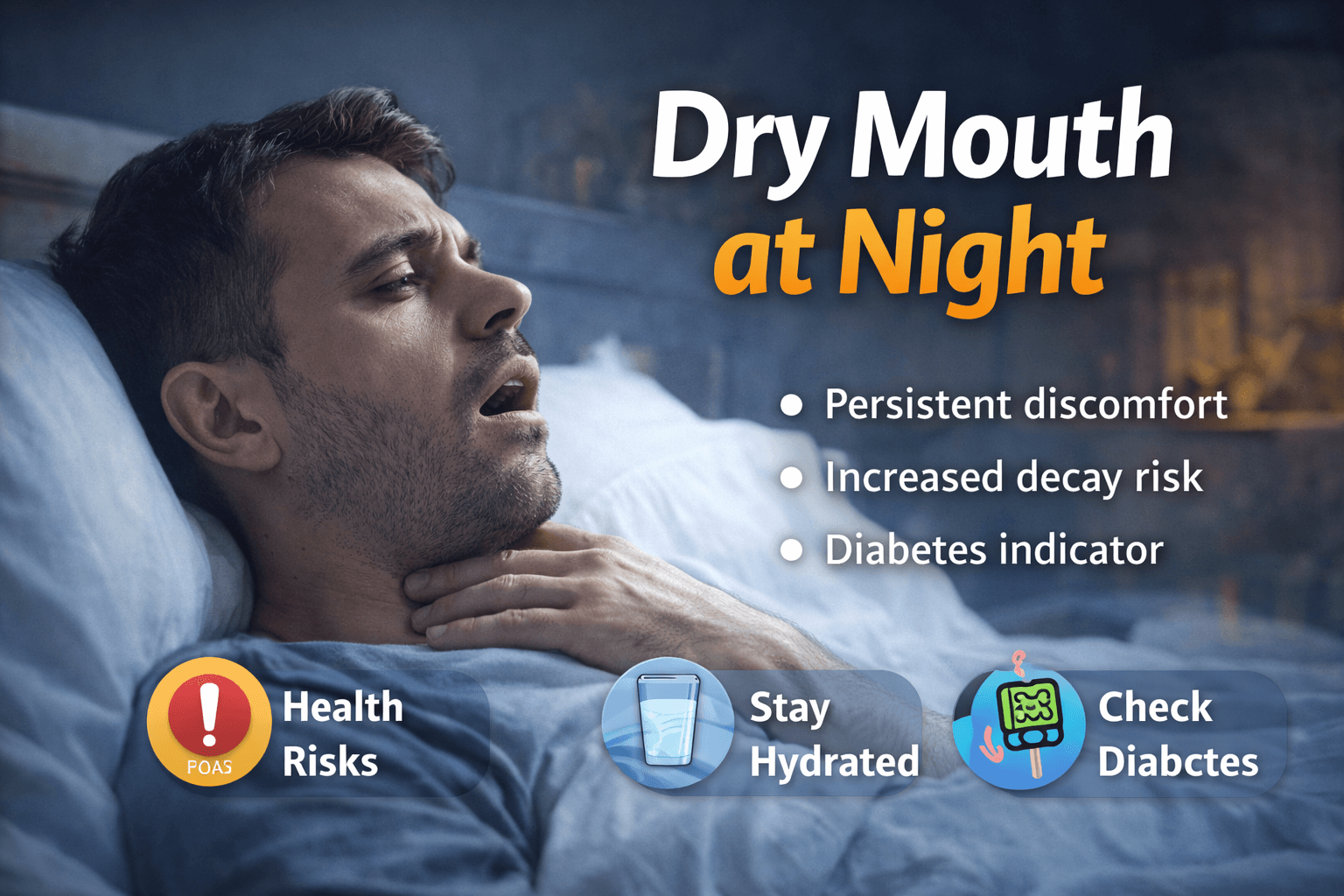
Waking up with a dry, sticky mouth can be uncomfortable and frustrating. For some people, it happens occasionally. For others, dry mouth at night becomes a regular problem that affects sleep, oral health, and overall well-being.
If you often wake up thirsty, struggle to swallow, or feel your mouth completely dry during the night, it’s worth understanding why it happens and when it could signal a deeper health issue.
Table of Contents
What Is Dry Mouth at Night?
Dry mouth at night, also known as nocturnal xerostomia, occurs when saliva production drops while you sleep. Saliva plays a vital role in keeping your mouth moist, neutralizing acids, and preventing bacterial growth.
When saliva flow decreases, your mouth may feel:
- Sticky or chalky
- Difficult to swallow
- Uncomfortable or irritated
- Prone to bad breath
Occasional dryness is normal, but persistent symptoms should not be ignored.
Common Causes of Dry Mouth at Night
1. Mouth Breathing While Sleeping
Breathing through your mouth instead of your nose is one of the most common causes of dry mouth at night.
Why it happens:
- Nasal congestion
- Allergies
- Deviated septum
- Snoring or sleep apnea
Airflow through the mouth dries out oral tissues, reducing moisture overnight.
2. Dehydration
Not drinking enough water during the day can show up as dryness at night.
Signs dehydration may be the cause:
- Dark urine
- Dry lips
- Fatigue
- Headaches
Alcohol and caffeine can worsen dehydration, especially when consumed in the evening.
3. Medications
Many commonly prescribed medications list dry mouth as a side effect.
These include:
- Antihistamines
- Antidepressants
- Blood pressure medications
- Anxiety and sleep aids
If dry mouth started after a new prescription, medication may be the trigger.
4. Dry Mouth at Night and Diabetes
Dry mouth at night diabetes is a frequently searched concern—and for good reason.
High blood sugar levels can:
- Increase urination
- Cause dehydration
- Reduce saliva production
If dry mouth is paired with excessive thirst, frequent urination, or fatigue, diabetes testing may be necessary.
5. Aging and Saliva Reduction
As we age, saliva production can naturally decrease. Older adults are also more likely to take medications that worsen dryness.
This makes dry mouth at night more common in people over 50.
6. Smoking and Tobacco Use
Smoking irritates oral tissues and reduces saliva flow. It also increases the risk of gum disease, cavities, and infections when dry mouth is present.
7. Underlying Medical Conditions
Some health conditions directly affect saliva glands, such as:
- Sjögren’s syndrome
- Sleep apnea
- Acid reflux (GERD)
- Autoimmune disorders
Persistent dry mouth should always be evaluated if it doesn’t improve with basic lifestyle changes.
Why Dry Mouth at Night Shouldn’t Be Ignored
Dry mouth isn’t just uncomfortable—it can lead to real health problems.
Potential Risks
- Tooth decay and cavities
- Gum disease
- Bad breath
- Oral infections
- Difficulty speaking or swallowing
Saliva protects your teeth. Without it, bacteria multiply more easily.
When Should You Worry About a Mosquito Bite?
(And why it matters here)
You may notice dry mouth listed alongside other symptoms when the body is under stress, fighting infection, or experiencing dehydration.
In some cases, body reactions like fever or dehydration from being sick can cause dry mouth during the night. Although the question “When Should You Worry About a Mosquito Bite?” is usually linked to signs of infection, the main idea is this:
If dryness appears suddenly alongside fever, swelling, fatigue, or infection signs, medical evaluation is wise.
How to Relieve Dry Mouth at Night
Simple At-Home Solutions
- Drink water consistently throughout the day
- Avoid alcohol and caffeine before bed
- Use a humidifier in your bedroom
- Breathe through your nose whenever possible
Bedtime Habits That Help
- Sip water before sleep (but not excessively)
- Brush teeth gently to avoid gum irritation
- Use alcohol-free mouthwash
- Avoid salty or spicy foods at night
Products That Can Help
- Saliva substitutes or oral gels
- Sugar-free lozenges or gum
- Xylitol-based mouth sprays
These stimulate saliva without damaging teeth.
Dry Mouth at Night: Pros and Cons of Common Remedies
| Remedy | Pros | Cons |
|---|---|---|
| Drinking water | Simple and natural | May cause nighttime bathroom trips |
| Humidifier | Improves breathing | Needs regular cleaning |
| Sugar-free gum | Boosts saliva | Not ideal during sleep |
| Mouth sprays | Fast relief | Temporary solution |
When to See a Doctor
You should seek medical advice if:
- Dry mouth persists for weeks
- You wake up every night extremely thirsty
- You have symptoms of diabetes
- Mouth sores or infections appear
- Swallowing becomes difficult
Early diagnosis can prevent long-term oral damage.
Know more about dry mouth here.
People Also Ask (FAQ)
Why do I wake up with dry mouth every night?
Chronic dry mouth at night is often caused by mouth breathing, medications, dehydration, or underlying health conditions.
Is dry mouth at night a sign of diabetes?
It can be. Dry mouth at night diabetes is commonly linked to high blood sugar and dehydration.
Can anxiety cause dry mouth at night?
Yes. Stress and anxiety can reduce saliva flow and promote mouth breathing during sleep.
Does dry mouth go away on its own?
Occasional dryness may resolve with hydration, but persistent symptoms usually need lifestyle changes or medical evaluation.
Is dry mouth dangerous?
Left untreated, it can increase the risk of cavities, gum disease, and infections.
Conclusion: Key Takeaways
Dry mouth at night is more than a minor annoyance—it can be a sign that your body needs attention. While dehydration or mouth breathing are common causes, persistent dryness may point to medication side effects or conditions like diabetes.
Remember:
- Stay hydrated
- Improve nighttime breathing
- Review medications
- Seek medical advice if symptoms persist
Addressing the cause early protects your oral health and improves sleep quality.
Our other blogs:
Explore more helpful guides to support a healthy lifestyle for your family.