- Follow us:


Overeating: Symptoms, Causes, and How to Stop It Naturally
29/01/2026
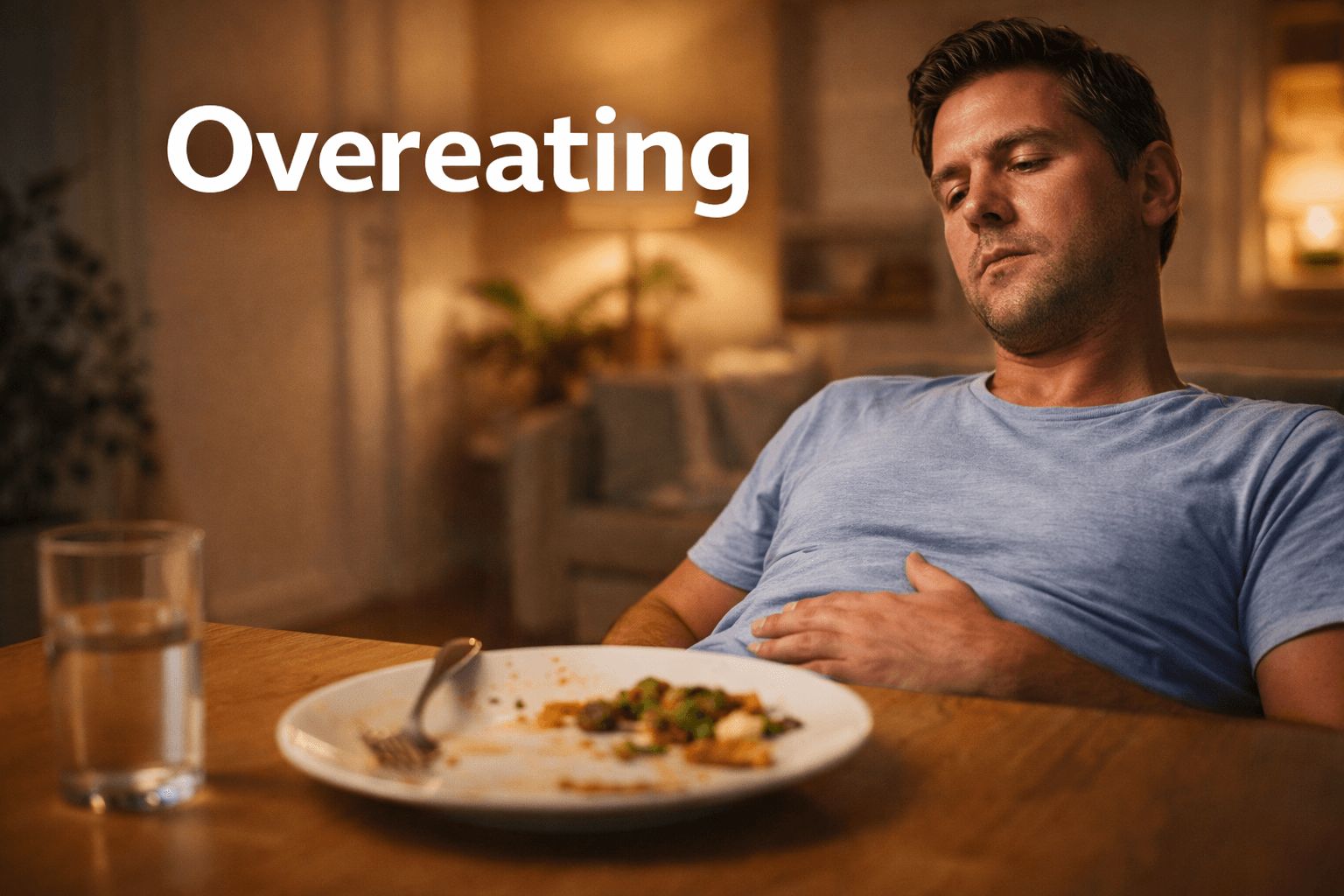
Overeating is something most people experience at some point in life—during festivals, stressful weeks, or social gatherings. While eating a little extra occasionally is normal, excessive eating can affect digestion, energy levels, emotional well-being, and long-term health.
Understanding why you might eat more than you intend and learning ways to handle it can help you develop a healthier connection with food—without feeling guilty or needing to follow strict diets.
Table of Contents
What Is Overeating?
Overeating means consuming more food than your body needs, often continuing to eat even after you feel full. This behavior isn’t always driven by hunger. Many times, it’s influenced by emotions, habits, environment, or even portion sizes.
It’s important to remember that overconsumption is not a personal failure. It’s a common response to modern lifestyles and food environments.
Common Symptoms
The symptoms can be physical, emotional, or behavioral. Spotting these patterns early can stop problems from getting worse.
Physical Symptoms
- Bloating or stomach discomfort
- Heartburn or acid reflux
- Feeling heavy or sluggish after meals
- Frequent fatigue after eating
Emotional and Behavioral Signs
- Feeling guilty or ashamed after meals
- Eating when bored, stressed, or anxious
- Difficulty stopping once you start eating
Experiencing these symptoms occasionally is normal, but frequent patterns may signal the need for change.
Common Causes
There is rarely a single cause. Eating too much usually results from a combination of factors.
1. Emotional Eating
Stress, loneliness, anxiety, or sadness can lead people to seek comfort in food. Emotional eating often bypasses natural hunger and fullness cues.
2. Highly Processed Foods
Foods high in sugar, salt, and fat are designed to be hyper-palatable. They can interfere with your body’s ability to signal fullness, increasing the likelihood of overconsumption.
3. Skipping Meals
Skipping breakfast or lunch can cause extreme hunger later in the day, making it harder to regulate portions.
4. Distractions While Eating
Eating while watching TV or scrolling through your phone can make you lose touch with when you’re really hungry, which can lead to eating without thinking.
Overeating vs Overeating Disorder
Occasional overconsumption isn’t the same as an overeating disorder. Understanding this difference helps reduce unnecessary self-blame.
| Habitual Overeating | Overeating Disorder |
|---|---|
| Happens occasionally | Occurs frequently |
| Situation-based | Ongoing pattern |
| Mild discomfort | Emotional distress |
| No loss of control | Feeling out of control |
An overeating disorder often includes repeated unhealthy eating habits, emotional stress, and trouble controlling how much or when you eat. If this is something you’re struggling with, getting help from a professional can make a big difference.
How Overconsumption Affects the Body
When this(excessive eating) becomes frequent, it can impact both physical and mental health:
- Digestive discomfort and bloating
- Weight gain over time
- Hormonal imbalances affecting appetite
- Reduced energy and poor sleep quality
Over time, these effects can influence overall well-being and confidence.
How to Stop Overeating Without Extreme Diets
If you’re searching for realistic ways on how to stop this, focus on small, sustainable changes rather than strict rules.
Practical Strategies
- Eat slowly and chew thoroughly
- Serve meals on smaller plates
- Include protein and fiber in every meal
- Drink water before and during meals
- Avoid eating directly from packages
Lifestyle Habits That Help
- Get adequate sleep to regulate hunger hormones
- Manage stress with walking, breathing exercises, or journaling
- Maintain consistent meal timing
These habits support appetite awareness and naturally reduce overeating behaviors.
If you want to know more about foods that make you eat more, find out here.
Can Overeating Be Prevented?
Yes. Prevention starts with awareness rather than restriction. Listening to hunger cues, planning balanced meals, and creating a supportive food environment can significantly lower the chances of excessive eating.
Frequently Asked Questions
Is excessive eating always unhealthy?
No. Occasional overeating is a normal part of life and doesn’t harm health.
Does excessive eating always lead to weight gain?
Not necessarily. Weight gain depends on frequency, food quality, and overall lifestyle.
How long does it take to stop overeating habits?
Many people notice improvement within a few weeks of consistent, mindful changes.
Final Takeaway
Overeating is not about willpower—it’s often shaped by emotions, habits, and environment. By understanding your triggers and adopting mindful habits, you can reduce excessive eating naturally and enjoy food without guilt.
Our other blogs:
Explore more helpful guides to support a healthy lifestyle for your family.