- Follow us:


Night Sweats in Women: Causes, Symptoms, and When to Worry
21/01/2026
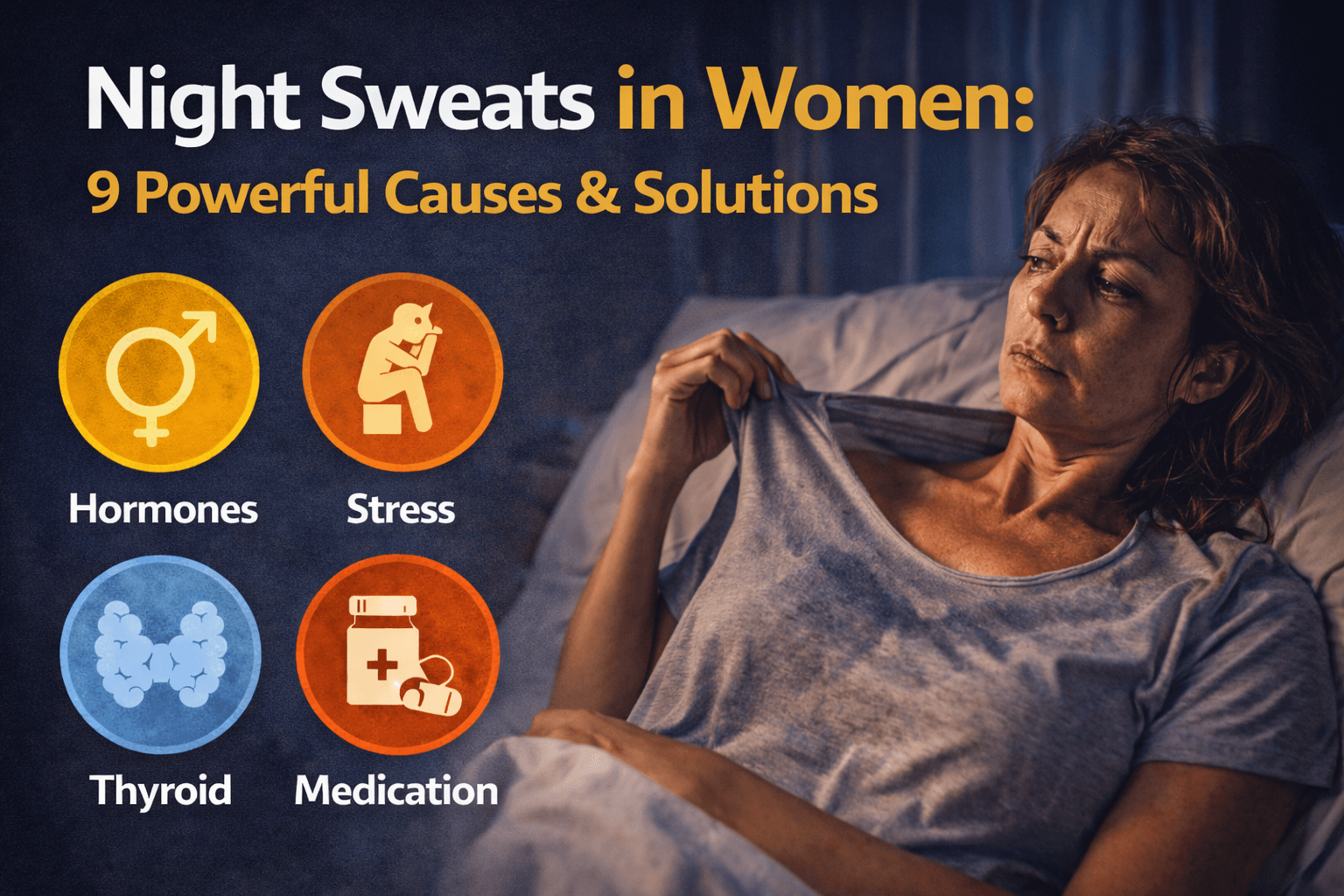
Waking up drenched in sweat—even in a cool room—can be unsettling. For many, it happens occasionally. But for others, night sweats in women become a recurring problem that disrupts sleep, energy levels, and daily life.
Night sweats aren’t just about feeling warm. They often point to internal changes happening in the body. Hormones, lifestyle habits, emotional stress, and certain medical conditions can all play a role.
This guide breaks down what causes night sweats, why women experience them more often, and what you can do to reduce or manage them effectively.
Table of Contents
What Are Night Sweats?
Night sweats refer to excessive sweating during sleep that soaks clothes or bedding—even when the room temperature is comfortable.
They are different from:
- Light sweating due to warm weather
- Sweating caused by heavy blankets
- Normal body heat after exercise or spicy food
True night sweats usually happen repeatedly and without obvious external triggers.
Why Night Sweats in Women Are So Common
Women experience unique biological and hormonal shifts throughout life. These fluctuations can affect the body’s temperature regulation system, making night sweats in women more common than in men.
Common female-specific factors include:
- Menstrual cycle changes
- Pregnancy
- Postpartum hormonal shifts
- Perimenopause and menopause
What Causes Night Sweats in Women?
Understanding the reason is the first step in finding relief. Below are the most common reasons women experience night sweats.
Hormonal Changes (The Most Common Cause)
1. Menstrual Cycle Fluctuations
Throughout the month, estrogen and progesterone levels go up and down. Just before a period, estrogen drops, which can confuse the body’s internal thermostat.
Common signs:
- Night sweats a few days before periods
- Restless sleep
- Mood changes
2. Pregnancy and Postpartum Changes
During pregnancy, increased blood flow and hormonal shifts raise body temperature. After delivery, estrogen levels drop suddenly, often triggering night sweats.
Postpartum night sweats usually:
- Start within the first week after delivery
- Improve within a few weeks
- Are accompanied by fatigue and chills
3. Perimenopause and Menopause
This is the leading cause of night sweats in women over 40.
Hot flashes don’t just happen during the day—they often strike at night.
Why it happens:
- Estrogen decline affects temperature regulation
- The brain mistakenly signals overheating
Typical symptoms:
- Sudden heat waves during sleep
- Drenching sweat
- Waking up multiple times at night
Lifestyle Factors That Trigger Night Sweats
Sometimes, daily habits quietly contribute to the problem.
4. Stress and Anxiety
Chronic stress keeps the nervous system on high alert. This raises cortisol levels and increases body heat, especially at night.
Signs stress-related night sweats may be the cause:
- Racing thoughts before bed
- Light or fragmented sleep
- Sweating during vivid dreams
5. Diet and Alcohol
Certain foods and drinks can overstimulate the nervous system.
Common triggers include:
- Spicy foods
- Caffeine
- Alcohol before bedtime
Alcohol, in particular, dilates blood vessels and interferes with temperature control.
6. Overheating at Night
This seems obvious but is often overlooked.
Contributors include:
- Heavy blankets
- Synthetic sleepwear
- Poor ventilation
- High humidity
Medical Conditions Linked to Night Sweats in Women
When lifestyle changes don’t help, it’s important to look deeper.
7. Thyroid Disorders
An overactive thyroid speeds up metabolism, increasing heat production.
Other symptoms include:
- Weight loss
- Rapid heartbeat
- Tremors
- Anxiety
8. Infections
Some infections cause night sweats as the body fights off illness.
Examples:
- Tuberculosis
- Chronic urinary infections
- Viral infections
Persistent fever along with night sweats should never be ignored.
9. Blood Sugar Imbalances
Low blood sugar during sleep—especially in women with diabetes—can cause sweating and sudden awakenings.
10. Certain Medications
Some medications interfere with temperature regulation.
Common culprits:
- Antidepressants
- Hormone therapies
- Fever-reducing medications
- Steroids
When Should Night Sweats Be a Concern?
Occasional sweating isn’t alarming. However, seek medical advice if night sweats in women are:
- Happening several times a week
- Severe enough to soak bedding
- Accompanied by fever, weight loss, or fatigue
- Persistent for more than a few weeks
How to Manage Night Sweats Naturally
Many women find relief with small, consistent changes.
Bedroom and Sleep Adjustments
- Use breathable cotton sheets
- Switch to lightweight blankets
- Keep room temperature cool
- Use a fan or air circulation
Lifestyle Changes That Help
- Avoid alcohol and spicy foods at night
- Limit caffeine after noon
- Practice relaxation techniques before bed
- Maintain a consistent sleep schedule
Stress-Reduction Techniques
- Deep breathing exercises
- Gentle yoga
- Journaling before sleep
- Guided meditation
Medical Treatments for Severe Night Sweats
If changing your lifestyle doesn’t work, a doctor might recommend:
- Hormone replacement therapy (for menopause)
- Thyroid treatment
- Medication adjustments
- Blood sugar management plans
Always consult a professional before starting or stopping medication.
Did you know that night sweats also happen in men? Read here.
Night Sweats in Women vs Men: Is There a Difference?
Yes. While men also experience night sweats, women are more affected due to hormonal fluctuations.
Key differences:
- Women: Often hormone-related
- Men: More commonly linked to infections or medications
Frequently Asked Questions (FAQs)
Are night sweats in women normal?
Yes, especially during hormonal changes like menstruation, pregnancy, or menopause. Persistent symptoms, however, should be evaluated.
What causes night sweats without fever?
Hormonal changes, stress, anxiety, medications, and blood sugar fluctuations are common reasons.
Can dehydration cause night sweats?
Indirectly, yes. Dehydration affects temperature regulation and may worsen sweating.
Do night sweats mean menopause?
Not always. While menopause is a common cause, many younger women experience night sweats due to stress, diet, or medical conditions.
How long do menopause-related night sweats last?
They can last from a few months to several years, varying from woman to woman.
Key Takeaways
- Night sweats in women are common and often hormone-related
- Stress, diet, and lifestyle play a major role
- Persistent or severe symptoms should not be ignored
- Small changes can bring noticeable relief
- Medical guidance is important when symptoms worsen
Understanding your body is the first step toward better sleep and improved well-being. If night sweats are affecting your quality of life, addressing the root cause can make all the difference.
Our other blogs:
Explore more helpful guides to support a healthy lifestyle for your family.