- Follow us:


Night Sweats Women: Causes, Symptoms, and Effective Solutions
21/01/2026
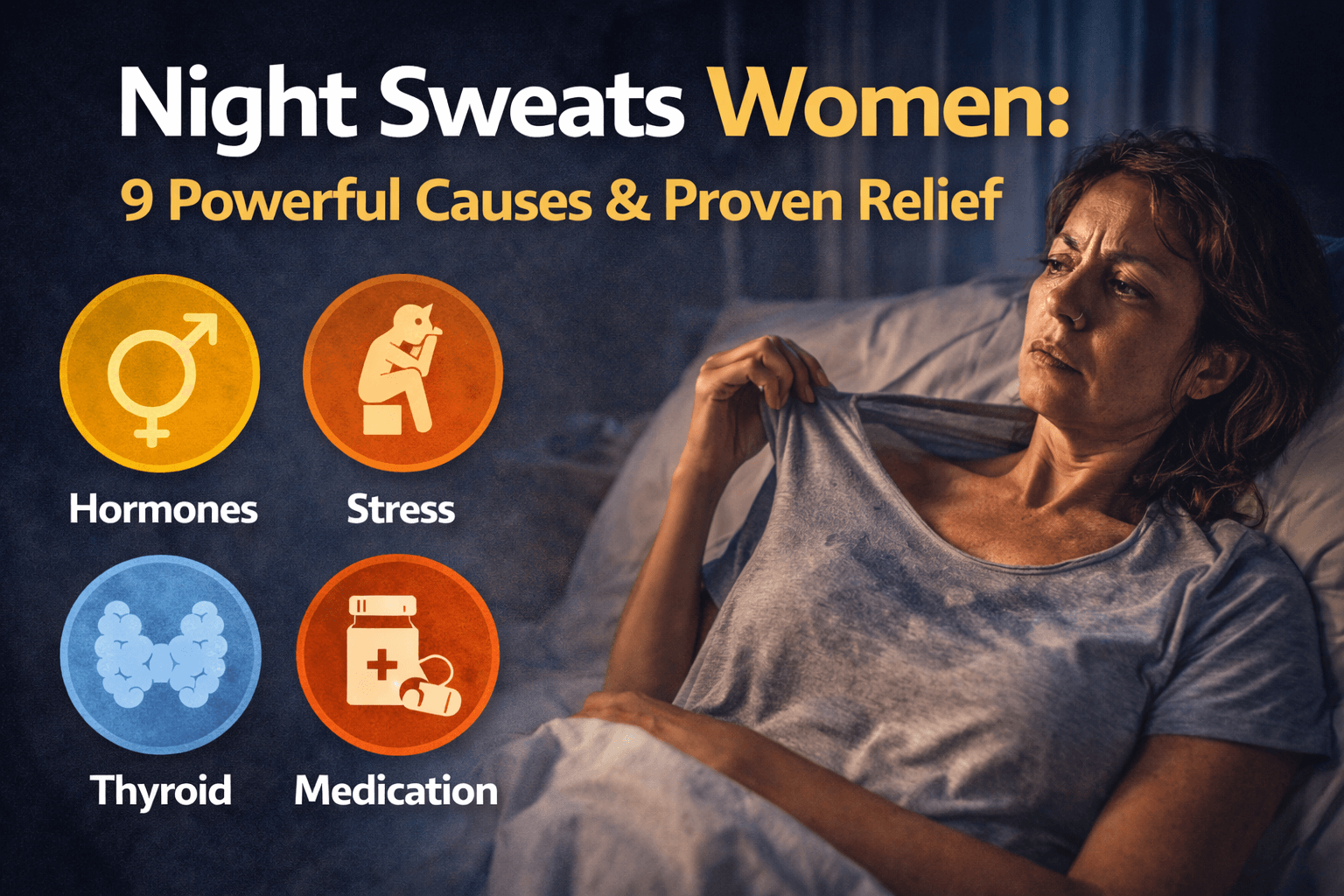
Waking up drenched in sweat can be unsettling—especially when it happens regularly. Night sweats women experience are more common than many realize and can occur at different life stages, from early adulthood to menopause and beyond. While occasional sweating during sleep may be harmless, persistent night sweats often raise questions about underlying health causes.
Understanding what causes night sweats is the first step toward finding relief. In this guide, we’ll break down the most common reasons, explain when night sweats may signal a health concern, and share practical ways to reduce their impact on your sleep and overall well-being.
Table of Contents
What Are Night Sweats?
Night sweats refer to excessive sweating during sleep that soaks clothes or bedding—even in a cool room. Unlike mild perspiration caused by heavy blankets or warm temperatures, true night sweats occur without obvious environmental triggers.
For women, night sweats are often linked to internal changes such as hormone fluctuations, stress responses, or medical conditions.
Why Night Sweats Women Experience Are Different
While anyone can have night sweats, women face unique biological factors that influence body temperature regulation, including:
- Hormonal cycles
- Pregnancy and postpartum changes
- Menopause and perimenopause
- Thyroid function differences
These factors make night sweats women report more frequent and sometimes more intense than in men.
What Causes Night Sweats in Women?
Understanding what causes night sweats can help narrow down whether the issue is temporary or needs medical attention.
1. Hormonal Imbalances
Hormones are important in controlling how warm or cool the body stays. Even slight fluctuations can trigger excessive sweating at night.
Common hormonal causes include:
- Estrogen drops
- Progesterone changes
- Thyroid hormone imbalance
These shifts confuse the body’s temperature control system, causing sudden heat surges during sleep.
2. Perimenopause and Menopause
One of the most common reasons night sweats women experience is menopause-related hot flashes during sleep.
Symptoms often include:
- Sudden heat waves
- Rapid heartbeat
- Intense sweating followed by chills
Night sweats can begin years before menopause officially starts and may continue afterward.
3. Stress and Anxiety
Chronic stress activates the nervous system and raises cortisol levels, which can interfere with normal temperature regulation.
Signs stress-related night sweats may be the cause:
- Racing thoughts before sleep
- Difficulty falling or staying asleep
- Waking with a rapid heartbeat
4. Infections and Illness
Certain infections can cause the body to sweat excessively at night as it fights illness.
Examples include:
- Viral infections
- Tuberculosis
- Chronic inflammatory conditions
If night sweats are accompanied by fever or unexplained weight loss, medical evaluation is important.
5. Medications
Some medications interfere with the body’s heat regulation.
Common culprits:
- Antidepressants
- Hormone therapies
- Steroids
- Fever-reducing medications
If night sweats begin after starting a new medication, speak with a healthcare provider.
6. Thyroid Disorders
An overactive thyroid (hyperthyroidism) speeds up metabolism and increases body heat production.
Symptoms may include:
- Night sweats
- Anxiety
- Rapid heartbeat
- Weight loss
Thyroid-related night sweats are often overlooked but very treatable.
7. Blood Sugar Fluctuations
Low blood sugar during the night can trigger sweating, especially in women with diabetes or insulin resistance.
Signs include:
- Nighttime sweating
- Shakiness upon waking
- Hunger during the night
8. Sleep Environment Factors
Sometimes the cause is simple, but overlooked.
Examples:
- Heavy blankets
- Poor ventilation
- Synthetic sleepwear
While not the primary cause, these factors can worsen night sweats.
9. Underlying Medical Conditions
In rare cases, persistent night sweats may be linked to more serious conditions, such as autoimmune disorders or cancers.
Seek medical advice if night sweats:
- Occur frequently
- Are severe
- Come with fatigue, pain, or unexplained weight loss
Common Symptoms Associated With Night Sweats
Night sweats women may also notice:
- Interrupted sleep
- Daytime fatigue
- Mood changes
- Difficulty concentrating
- Anxiety around bedtime
These secondary effects can impact daily quality of life if left unaddressed.
How to Reduce Night Sweats Naturally
While treatment depends on the cause, many night sweats women find relief with simple lifestyle changes.
Practical Tips That Help:
- Keep bedroom temperature cool
- Use breathable cotton bedding
- Avoid spicy foods before bed
- Reduce caffeine and alcohol intake
- Practice stress-relief techniques (deep breathing, meditation)
Medical Treatments for Night Sweats Women
If lifestyle changes aren’t enough, medical options may include:
- Hormone therapy (when appropriate)
- Thyroid treatment
- Medication adjustments
- Anxiety or stress management plans
A healthcare provider can help identify the best approach based on symptoms and medical history.
When Should Women See a Doctor?
Consult a healthcare professional if:
- Night sweats occur multiple times a week
- Symptoms worsen over time
- Night sweats disrupt sleep consistently
- Other symptoms appear alongside sweating
Getting checked early can stop problems from happening and give you a sense of comfort.
Did you know that night sweats also happen in men? Read here.
FAQ: Night Sweats Women Commonly Ask About
What causes night sweats in women who are not menopausal?
Hormonal imbalances, stress, medications, thyroid issues, and infections are common causes.
Are night sweats dangerous?
Occasional night sweats are usually harmless, but persistent or severe sweating should be checked.
Can anxiety cause night sweats?
Yes. Anxiety activates stress hormones that interfere with normal temperature regulation.
How long do night sweats last?
Duration varies. Hormonal night sweats may last months or years, while stress-related episodes may improve sooner.
Key Takeaways
- Night sweats women experience often stem from hormonal changes, stress, or medical conditions
- Understanding what causes night sweats helps guide effective treatment
- Lifestyle adjustments can significantly reduce symptoms
- Persistent night sweats should never be ignored
With the right approach, most women can manage night sweats effectively and enjoy better sleep again.
Our other blogs:
Explore more helpful guides to support a healthy lifestyle for your family.