- Follow us:


What Causes Lower Back Pain in Females?
16/01/2026
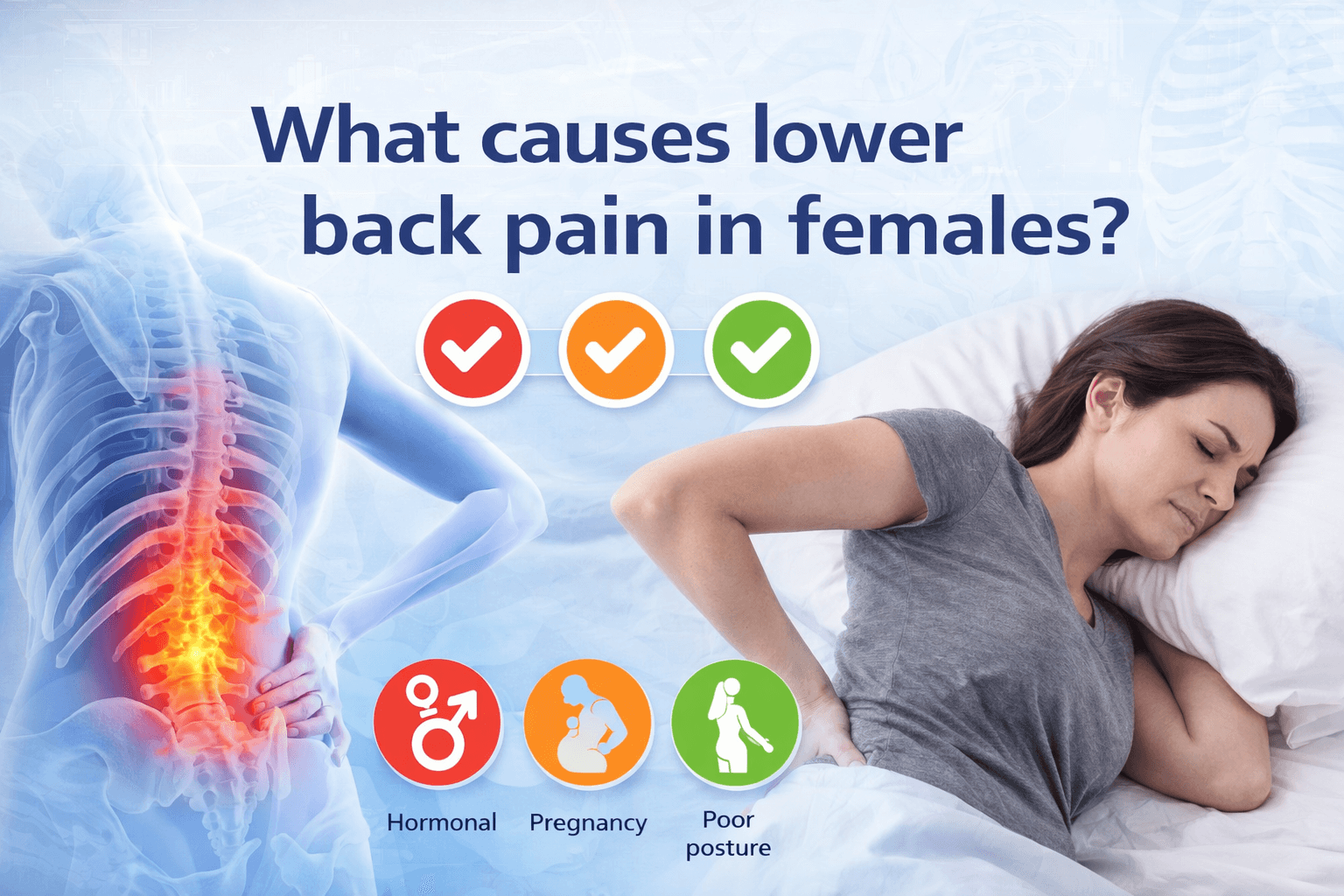
Lower back pain is one of the most common health complaints among women, affecting daily routines, sleep quality, and overall well-being. If you’ve ever wondered what causes lower back pain in females, the answer isn’t always simple. Women experience unique physical, hormonal, and lifestyle factors that can trigger or worsen discomfort in the lower back.
From menstrual cycles and pregnancy to posture habits and sleeping positions, multiple elements may be at play. Understanding the root cause is the first step toward effective relief and long-term prevention.
Table of Contents
Understanding Lower Back Pain in Women
Lower back pain refers to discomfort or stiffness in the area between the ribcage and pelvis. It can be light and happen sometimes or really bad and last a long time. In females, this pain often overlaps with reproductive health, hormonal changes, and musculoskeletal differences.
Some women experience sudden pain, while others deal with chronic discomfort that develops gradually. Identifying patterns—such as pain during sleep, periods, or physical activity—can provide valuable clues.
12 Common Reasons: What Causes Lower Back Pain in Females
1. Hormonal Changes During Menstrual Cycle
Hormonal fluctuations before and during menstruation can loosen ligaments and increase inflammation.
Why it happens:
- Rise in prostaglandins causes muscle contractions
- Ligaments around the pelvis become more flexible
- Increased sensitivity to pain
This explains why many women feel lower back pain just before or during their periods.
2. Pregnancy and Postpartum Changes
Pregnancy significantly alters posture, weight distribution, and spinal alignment.
Key contributing factors:
- Growing uterus shifts the center of gravity
- Increased lumbar curve
- Weakening of core and pelvic muscles
Even after childbirth, lingering muscle weakness can continue to cause pain if not addressed.
3. Poor Posture and Sedentary Lifestyle
One of the most overlooked answers to what causes lower back pain in females is posture-related strain.
Common habits include:
- Sitting for long hours at a desk
- Slouching while using mobile phones
- Sitting without lumbar support
Over time, poor posture stresses spinal discs and muscles.
4. What Causes Lower Back Pain in Females While Sleeping?
Night-time back pain is especially frustrating and often linked to sleep habits.
Possible reasons include:
- Unsupportive or worn-out mattress
- Sleeping on the stomach
- Poor pillow height affecting spinal alignment
Side sleepers without knee support may also strain their lower back during sleep.
5. Muscle Strain and Overuse
Daily activities like lifting groceries, housework, or sudden movements can strain muscles.
Women are more prone to:
- Repetitive bending
- Carrying children on one hip
- Improper lifting techniques
Even small strains can accumulate into chronic lower back pain.
6. Core Muscle Weakness
The lower back relies heavily on abdominal and pelvic muscles for support.
When core muscles are weak:
- The spine bears more load
- Muscles fatigue faster
- Posture worsens
This is common in women who don’t engage in regular strength training.
7. Gynecological Conditions
Certain reproductive health issues may present as lower back pain.
Examples include:
- Endometriosis
- Uterine fibroids
- Pelvic inflammatory disease (PID)
In these cases, back pain may worsen during menstruation or prolonged standing.
8. Osteoporosis and Bone Density Loss
Women, especially after menopause, face a higher risk of osteoporosis.
Why it matters:
- Bones become fragile
- Minor fractures can cause pain
- Spinal compression alters posture
Lower back pain may be an early warning sign.
9. Stress and Emotional Tension
Stress doesn’t just affect your mind—it also affects the body.
Chronic stress can cause:
- Muscle tightening in the lower back
- Reduced blood flow to muscles
- Heightened pain perception
This mind-body connection is often underestimated.
10. Weight Gain and Obesity
Excess body weight increases pressure on the lumbar spine.
This can lead to:
- Disc compression
- Muscle fatigue
- Poor posture
Weight gain during pregnancy or hormonal changes can amplify this effect.
11. Footwear Choices
High heels and unsupportive shoes alter posture and walking mechanics.
Over time, they:
- Shift weight forward
- Increase lumbar curve
- Stress spinal joints
This is a subtle but real contributor to lower back pain.
12. Age-Related Degenerative Changes
As women age, spinal structures naturally wear down.
Common conditions include:
- Degenerative disc disease
- Arthritis
- Spinal stiffness
These changes may develop slowly but lead to persistent discomfort.
When Lower Back Pain Should Not Be Ignored
Seek medical advice if lower back pain:
- Lasts more than a few weeks
- Worsens at night
- Radiates to legs
- Comes with numbness or weakness
- Is associated with fever or unexplained weight loss
Early diagnosis helps prevent complications.
If you want to know more about what causes lower back pain in females? Click here.
Practical Tips to Reduce Lower Back Pain
Daily Habits That Help
- Maintain good posture while sitting and standing
- Take movement breaks every 30–60 minutes
- Use lumbar support when sitting
Sleeping Adjustments
- Choose a medium-firm mattress
- Sleep on your side with a pillow between knees
- Avoid stomach sleeping if possible
Lifestyle Improvements
- Strengthen core muscles
- Manage stress through relaxation techniques
- Maintain a healthy body weight
Pros and Cons of Common Pain Relief Approaches
Pain Medications
Pros
- Quick relief
- Easily accessible
Cons
- Temporary solution
- Possible side effects
Physical Therapy
Pros
- Addresses root cause
- Long-term benefits
Cons
- Requires time and consistency
Lifestyle Changes
Pros
- Sustainable relief
- Improves overall health
Cons
- Results take time
Frequently Asked Questions (People Also Ask)
What causes lower back pain in females most commonly?
Hormonal changes, poor posture, muscle strain, and pregnancy are the most common causes.
What mostly causes lower back pain in females while sleeping?
Poor mattress support, wrong sleeping position, and spinal misalignment during sleep are major factors.
Can hormonal imbalance cause lower back pain?
Yes, hormonal fluctuations can affect ligaments, muscles, and pain sensitivity.
Is lower back pain in females linked to gynecological problems?
In some cases, conditions like endometriosis or fibroids can cause referred lower back pain.
When should I see a doctor for lower back pain?
If pain is severe, persistent, or accompanied by other symptoms, medical evaluation is recommended.
Conclusion: Key Takeaways
Understanding what causes lower back pain in females requires looking beyond muscles and bones. Hormones, posture, lifestyle, sleep habits, and reproductive health all play important roles. The good news is that many causes are manageable with simple adjustments and early care.
By identifying triggers and making informed changes, most women can reduce discomfort, improve mobility, and protect their spinal health in the long run.
Our other blogs:
Explore more helpful guides to support a healthy lifestyle for your family.