- Follow us:


Stretches for Lower Back Pain: Simple and Easy Moves for Lasting Relief
15/01/2026
Lower back pain is one of the most common reasons people struggle with daily movement, poor sleep, and reduced quality of life. The good news is that gentle, consistent stretching can significantly ease discomfort, restore flexibility, and prevent recurring pain.
In this guide, you’ll learn the best stretches for lower back pain, why they work, and how to perform them safely—whether you’re a beginner, office worker, or someone recovering from stiffness or strain.
Table of Contents
Understanding Lower Back Pain
Lower back pain can develop due to multiple factors, including poor posture, long hours of sitting, muscle imbalances, or lack of mobility. While severe pain should always be evaluated by a professional, most everyday discomfort responds well to movement-based care.
Common causes include:
- Tight hip flexors and hamstrings
- Weak core muscles
- Prolonged sitting or standing
- Poor lifting mechanics
- Stress-related muscle tension
This is where stretches for lower back pain play a crucial role in recovery and prevention.
Why Stretching Helps Lower Back Pain
Stretching improves blood flow, reduces muscle tightness, and helps restore natural spinal movement. When done consistently, it can relieve pressure on joints and nerves while improving posture and balance.
Benefits of daily stretching:
- Reduces stiffness and muscle tension
- Improves spinal mobility
- Enhances posture and movement efficiency
- Supports faster recovery from discomfort
- Helps prevent future episodes of lower back pain
Best Stretches for your Lower Back Pain (Safe & Effective)
Below are some of the most effective and beginner-friendly stretches for lower back pain, commonly recommended by physiotherapists and fitness professionals.
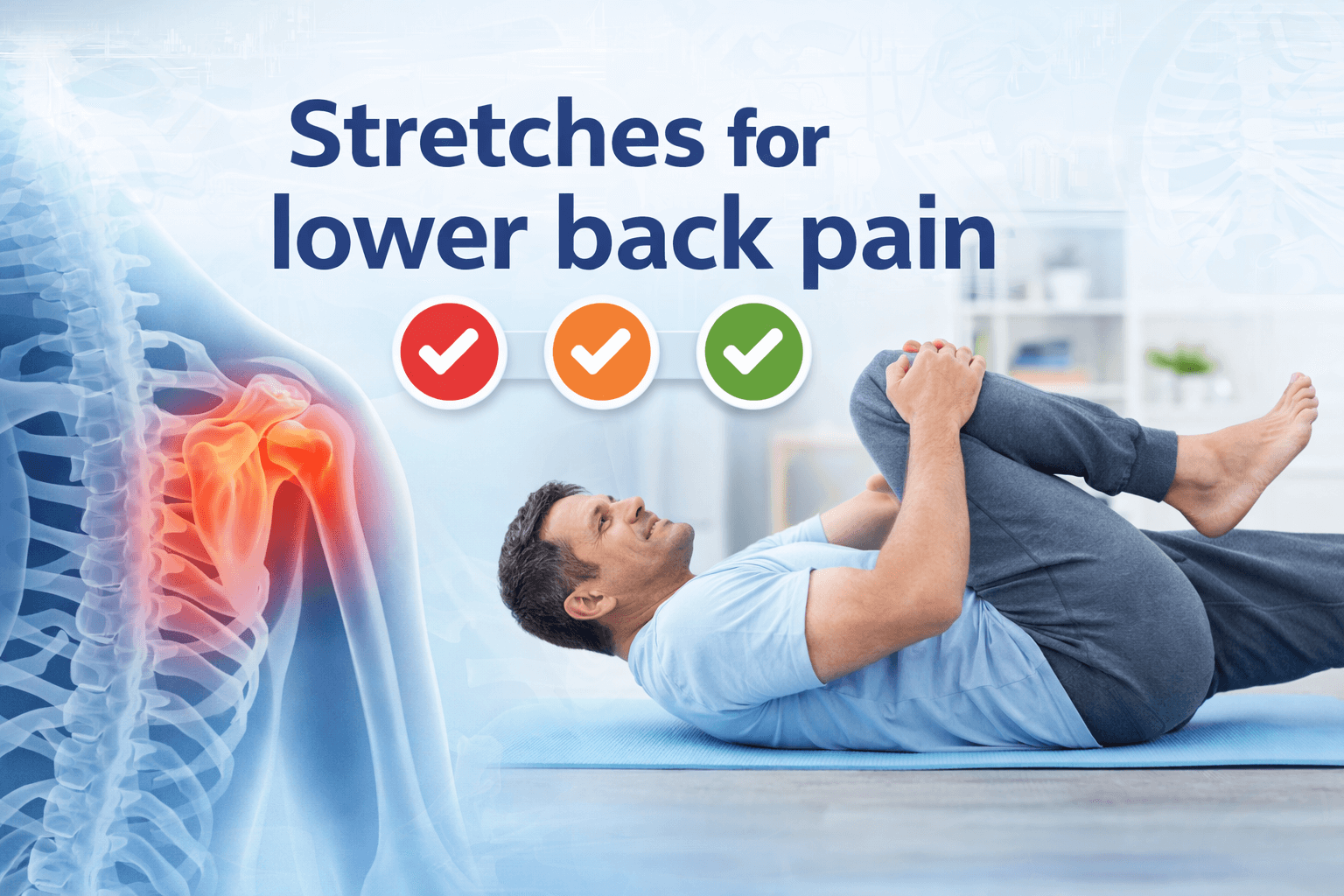
1. Knee-to-Chest Stretch
What it does: Gently stretches the lower spine and glutes.
How to do it:
- Lie on your back with knees bent
- Pull one knee toward your chest
- Hold for 20–30 seconds
- Switch sides
This is one of the simplest stretches for lower back pain and works well in the morning or before bed.
2. Cat-Cow Stretch
What it does: Improves spinal flexibility and reduces stiffness.
How to do it:
- Start on hands and knees
- Inhale, arch your back (Cow)
- Exhale, round your spine (Cat)
- Repeat for 8–10 slow rounds
This movement gently mobilizes the spine and is ideal for relieving lower back pain caused by prolonged sitting.
3. Child’s Pose
What it does: Releases tension in the lower back and hips.
How to do it:
- Get down on the floor and sit back onto your heels.
- Stretch arms forward and lower your chest
- Hold for 30–60 seconds
Among the best stretches for lower back pain, Child’s Pose promotes relaxation and spinal decompression.
4. Seated Forward Bend
What it does: Stretches hamstrings and lower back muscles.
How to do it:
- Sit with legs extended
- Hinge forward from the hips
- Reach toward your shins or feet
- Hold gently without forcing
Tight hamstrings often worsen lower back pain, making this stretch especially effective.
5. Pelvic Tilt
What it does: Strengthens the core while mobilizing the lower spine.
How to do it:
- Lie on your back with knees bent
- Flatten your lower back into the floor
- Hold for 5 seconds, release
- Repeat 10–12 times
This is one of the most recommended stretches for lower back pain during early recovery.
6. Figure-Four Stretch
What it does: Targets the glutes and hip muscles.
How to do it:
- Lie on your back
- Cross one ankle over the opposite knee
- Pull the uncrossed leg toward your chest
- Hold and switch sides
Hip tightness is a major contributor to lower back pain, making this stretch extremely valuable.
7. Standing Back Extension
What it does: Relieves pressure from prolonged sitting.
How to do it:
- Stand upright with hands on hips
- Gently lean backward
- Hold for a few seconds
- Repeat 5–8 times
This stretch is ideal for office workers experiencing lower back pain.
Can constipation cause lower back pain? Click here to know more.
How Often Should You Do Stretches for Lower Back Pain?
For best results, perform stretches daily or at least 4–5 times per week.
Recommended routine:
- Hold each stretch for 20–60 seconds
- Avoid bouncing or forced movement
- Breathe slowly and deeply
- Stop if pain increases
Consistency matters more than intensity when it comes to managing lower back pain.
Common Mistakes to Avoid
While stretches for lower back pain are generally safe, mistakes can slow recovery.
❌ Forcing deep stretches
❌ Holding your breath
❌ Stretching through sharp pain
❌ Ignoring posture during daily activities
Stretching should feel relieving—not painful.
When Stretching Alone Is Not Enough
Stretching is highly effective for mild to moderate lower back pain, but it’s not always sufficient on its own.
Seek professional guidance if:
- Pain lasts longer than a few weeks
- Pain radiates down the legs
- There is numbness or weakness
- Pain worsens with movement
In such cases, a combination of strength training, posture correction, and clinical care may be needed.
FAQ: Stretches for Lower Back Pain
Are stretches for lower back pain safe for beginners?
Yes. Gentle, controlled stretches are safe for beginners when done with proper form.
Can stretching worsen lower back pain?
Stretching should not cause sharp pain. If it does, stop immediately and consult a professional.
How long does it take to see results?
Many people notice reduced stiffness within 1–2 weeks of consistent stretching.
Should I stretch in the morning or evening?
Both are effective. Morning stretches reduce stiffness, while evening stretches help relax muscles.
Are these stretches suitable for seniors?
Yes, most of these stretches for lower back pain can be modified for seniors.
Conclusion: Build a Pain-Free Routine
Lower back pain doesn’t have to control your life. With the right approach, daily movement and mindful stretching can make a noticeable difference. The best stretches for lower back pain are simple, accessible, and effective when practiced consistently.
Start slowly, listen to your body, and make stretching part of your daily routine. Over time, you’ll build strength, mobility, and confidence in your movement—naturally and safely.
Our other blogs:
Explore more helpful guides to support a healthy lifestyle for your family.